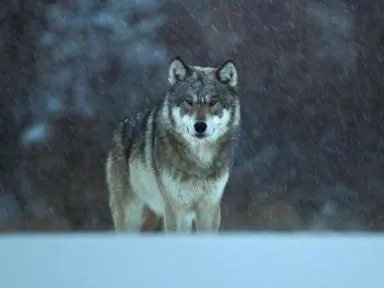
Wolves Up Close with Bertie Gregory is a new National Geographic documentary following filmmaker Bertie Gregory to Canada's Hudson Bay. The production aims to capture rare wolf behaviors during the harsh conditions of the Arctic winter. By documenting these predators in their natural habitat, the film provides a detailed look at survival in one of the planet's most extreme environments. The project focuses on the specific biological and social interactions of wolf packs during the winter season, offering viewers an intimate perspective on how these animals endure the freezing temperatures.
The expedition to Canada's Hudson Bay
The documentary centers on an expedition to the Hudson Bay region of Canada to observe wolf populations in situ. Bertie Gregory, the lead filmmaker, travels to this specific geographic area to document the species during the Arctic winter. This seasonal timing is critical for the study of the animals, as the extreme cold and limited light conditions dictate much of their movement and social structure.
The harshness of the Arctic environment serves as the primary backdrop for the footage. The production team must navigate significant climatic challenges to secure the necessary observations of the pack dynamics. According to the preview of the National Geographic project, the focus remains on the intersection of predator behavior and environmental extremity.
Capturing rare wolf behaviors
A primary objective of the documentary is the documentation of rare wolf behaviors that are seldom captured on film. These observations are intended to provide a deeper understanding of how wolves interact with one another and their environment under stress. The film utilizes high-definition cinematography to bring viewers into the immediate proximity of the animals.
Observing social structures in the wild
The footage seeks to illustrate the complex social hierarchies that exist within wolf packs. By observing these animals in the Hudson Bay region, Gregory aims to highlight specific interactions that occur during the winter months, such as hunting strategies and pack cohesion. These behaviors are essential for the survival of the species in such a demanding climate.
The role of Bertie Gregory in wildlife filmmaking
Bertie Gregory serves as the central figure and explorer for this National Geographic production. His approach involves direct engagement with the environment to facilitate close-up encounters with the subjects. This method of filmmaking is designed to bridge the gap between the viewer and the remote wilderness of the Arctic.
Gregory's work is characterized by a focus on intimate, high-stakes wildlife encounters. In this specific project, the goal is to move beyond standard nature footage to provide a more visceral experience of the wolf's existence. The documentary relies on his ability to maintain presence in extreme locations to achieve these results.
Environmental context of the Arctic winter
The Arctic winter provides the environmental constraints that shape the narrative of the documentary. The extreme temperatures and seasonal shifts in the Hudson Bay area influence the availability of prey and the energy expenditure of the wolves. This environmental pressure is a core component of the film's study of wildlife resilience.
| Environmental Factor | Impact on Wolf Behavior |
|---|---|
| Extreme Cold | Increased need for social huddling and energy conservation |
| Limited Daylight | Alteration of hunting patterns and nocturnal activity |
| Snow Cover | Challenges in tracking prey and movement through terrain |
The documentary highlights how these environmental variables act as selective pressures on the species. By documenting the wolves in this specific window of time, the film provides a snapshot of biological adaptation in real-time.