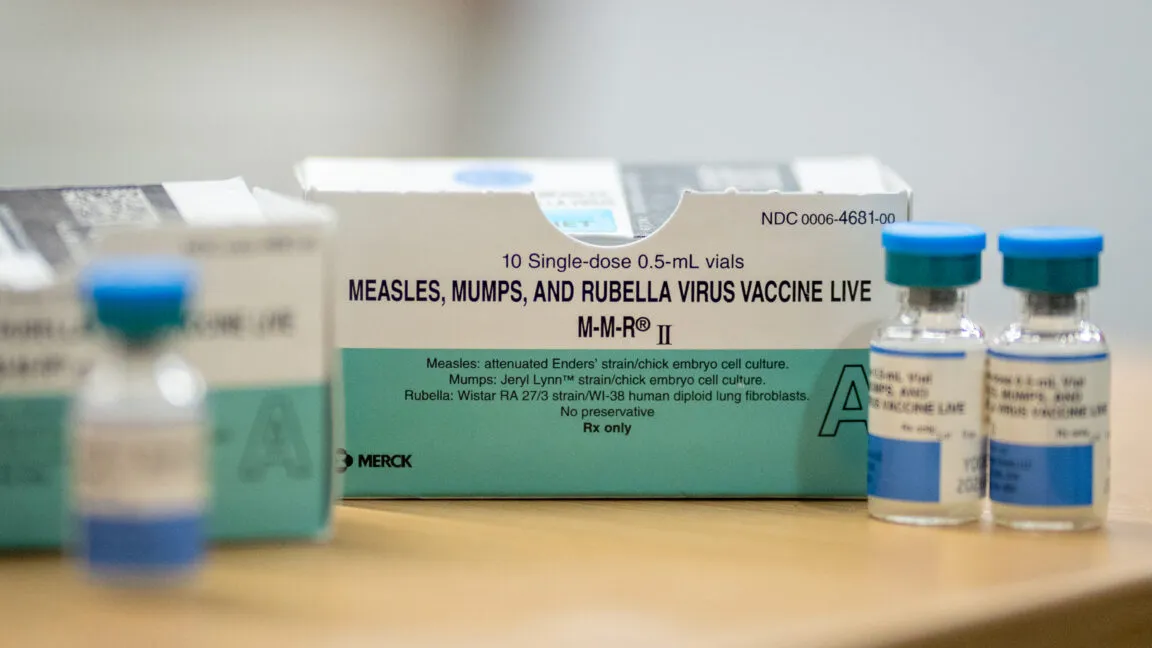
A measles death of an infant in Wisconsin has been reported, marking the first fatality in the state since 1990. This tragedy occurs as the United States faces a significant surge in infections, with the CDC reporting 5,182 measles cases across 47 states and jurisdictions as of November 5, 2026. The rise in cases and deaths, including recent fatalities in New York and Pennsylvania, has prompted an international review to determine if the US will lose its measles elimination status. This resurgence is linked to declining vaccination rates and the spread of misinformation.
Wisconsin reports first infant measles death in over three decades
The death of an infant in Wisconsin represents the first measles-related fatality in the state since 1990. This individual death is part of a larger, ongoing outbreak in the state that has infected more than 430 people across 13 counties throughout 2026. Wisconsin Health Secretary Kirsten Johnson addressed the loss, stating, “Any death of a child is a tragedy, and even more so when it is related to a vaccine-preventable disease.”
Health officials have emphasized the necessity for residents to evaluate their personal risks and take preventative measures. The Wisconsin outbreak highlights the continued circulation of the virus in areas where immunity may be insufficient. Officials noted that the true scale of such outbreaks is often difficult to gauge because not every ill individual seeks medical attention or undergoes testing, leading to potentially significant underreporting of cases.
National surge in measles cases and fatalities
The infant in Wisconsin is one of three measles deaths reported nationally within a single week, following fatalities in New York and Pennsylvania. According to CDC data as of November 5, 2026, there have been 5,182 confirmed cases in the US this year. While the CDC reports four deaths, the actual number of fatalities reported by state officials is higher, totaling nine deaths in the US this year, eight of which have been confirmed by state authorities.
Breakdown of reported US measles fatalities in 2026
| Location | Reported Deaths | Details |
|---|---|---|
| Wisconsin | 1 | Infant; first state death since 1990. |
| New York | 1 | Child. |
| Pennsylvania | 7 | Includes two babies, a healthy teen, and several adults. |
The current national tallies for both cases and deaths represent the highest levels recorded since 1991. The severity of the disease is underscored by historical data: prior to widespread vaccination, measles caused between 3 and 4 million infections annually, resulting in approximately 400 to 500 deaths and 1,000 cases of brain swelling each year.
International review of US elimination status
A committee of infectious disease experts is scheduled to meet between November 10 and 13, 2026, to assess whether the United States has lost its measles elimination status. This committee, assembled by the Pan American Health Organization (a regional office of the World Health Organization), will analyze epidemiological data from 2025 and the first half of 2026 to determine if the virus has reestablished continuous domestic transmission.
The US originally declared measles eliminated in 2000 after achieving a full year without domestic transmission, a milestone driven by high vaccination coverage. However, the current resurgence—fueled by slipping vaccination rates and the proliferation of anti-vaccine rhetoric—threatens this status. If the committee determines that transmission is no longer controlled, the US could be stripped of its elimination designation, reflecting a significant reversal in public health progress.
Controversy over death reporting and data collection
The process of confirming and reporting measles-associated deaths has become a point of intense political contention. Health Secretary Robert F. Kennedy Jr. has challenged the validity of recent reports from Pennsylvania, suggesting that state officials "fabricated" the deaths. Following these assertions, the CDC altered its reporting methodology, moving away from the long-standing practice of reporting state-confirmed deaths in favor of relying on federal death records.
This shift in methodology has implications for real-time outbreak management. Federal death records are not designed for rapid response during active outbreaks and typically take longer to process than state-level reporting. This change occurs amidst a dispute regarding a specific death in Franklin County, Pennsylvania, which a local coroner listed as a probable complication of measles, but which the state health department has not yet confirmed as meeting its specific criteria.
Discrepancies in Pennsylvania death investigations
The investigation into a 39-year-old woman's death in Franklin County illustrates the friction between local and state health reporting. According to the Franklin County Coroner, Jordan Conner, the death was a "probable acute cardiac event due to possible complications of the measles." The coroner noted the individual had been recently treated for the virus.
However, the Pennsylvania state health department has stated it has not found cases in Franklin County that meet the state's official criteria for a measles-associated death. Under state guidelines, a death is only classified as measles-associated if:
- The individual tests positive for the virus.
- The death occurs within 30 days of the positive test.
- The individual shows clinical signs of infection.
- There is no other significant cause of death, such as trauma.
As of November 6, 2026, the state investigation remains open. Meanwhile, legal action has been initiated by the Philadelphia Inquirer to obtain further details regarding the case, which currently remains partially sealed by a county judge.