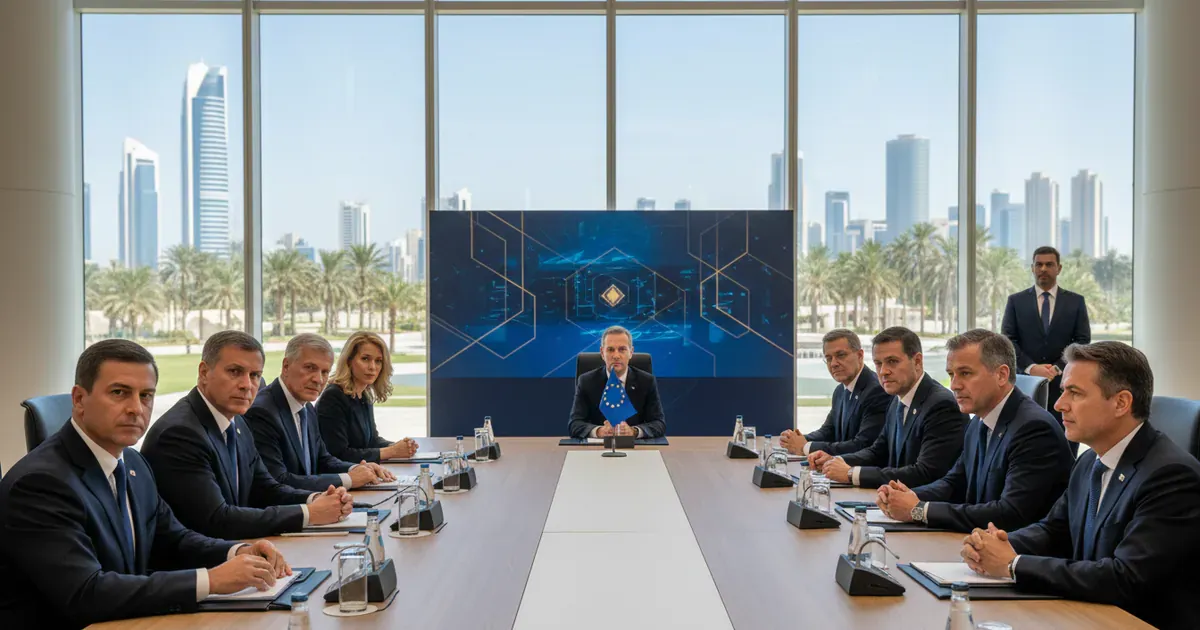
Ukraine peace talks Abu Dhabi are set to include European officials this week, despite previous objections from the Kremlin regarding the negotiation format. French Foreign Minister Jean-Noël Barrot confirmed on Sunday that France will attend the U.S.-mediated sessions in the United Arab Emirates to ensure Europe's voice is heard. The meetings, scheduled for Tuesday and Wednesday, follow a period of intense diplomatic maneuvering involving the Trump administration. While Moscow had previously insisted on a trilateral format involving only Washington, Moscow, and Kyiv, European involvement marks a significant shift in the diplomatic landscape as leaders attempt to address postwar security and humanitarian issues.
European involvement defies Kremlin objections
European officials will participate in the upcoming U.S.-mediated peace talks between Russia and Ukraine in the United Arab Emirates, marking a departure from the previously expected trilateral structure. French Foreign Minister Jean-Noël Barrot stated on Sunday that France intends to ensure European interests are represented during the discussions in Abu Dhabi. However, the specific nature of this involvement remains unconfirmed, as Barrot did not specify whether French or other European representatives will act as direct negotiators or serve in an observational capacity.
This decision follows explicit opposition from the Russian government. Kremlin spokesman Dmitry Peskov had previously ruled out a European role, maintaining that a trilateral format between the United States, Russia, and Ukraine had already been established. While Peskov acknowledged that security discussions would eventually necessitate European engagement, he criticized European governments for a perceived lack of unified representation. The move by France and other European powers suggests a push to prevent the negotiations from being relegated to a strictly superpower-led dialogue.
The shifting diplomatic format
The tension between the Kremlin's preferred format and the European approach highlights a fundamental disagreement over the scope of the peace process. While the Trump administration has positioned itself as the primary mediator, the inclusion of Europe complicates the bilateral and trilateral dynamics that Moscow sought to maintain. This shift occurs as President Trump has indicated that any forthcoming agreement could involve more than just the immediate combatants, potentially encompassing the broader European security architecture.
The negotiating landscape and the Trump administration's role
The upcoming meetings in Abu Dhabi represent the fourth round of talks brokered by the Trump administration and the first significant session since the Geneva meetings in February 2026. These negotiations follow a period of increased diplomatic activity, including a visit by U.S. envoy Steve Witkoff to meet Russian President Vladimir Putin in St. Petersburg this October. That meeting resulted in the release of an American prisoner, which Moscow presented as a gesture following the U.S. decision to lift sanctions on Russian diesel exports—a move Ukraine had strongly opposed due to its impact on Russian war funding.
The agenda for the Abu Dhabi talks, according to Steve Witkoff, will focus on several critical pillars of the conflict resolution process:
Postwar security arrangements and de-escalation protocols.
Humanitarian issues and aid access.
The implementation of ceasefire frameworks.
The administration's recent efforts include a limited ceasefire brokered by Melania Trump, which facilitated the entry of humanitarian aid into specific Russian-occupied areas in Ukraine. However, the effectiveness of these diplomatic maneuvers remains a subject of intense debate among international observers.
Russian delegation and composition of participants
Moscow is expected to send a significantly more senior delegation to the United Arab Emirates, potentially signaling a readiness to address complex political and military queries. The Russian team will again be led by Vladimir Medinsky, a long-standing Putin aide who has been a central figure in negotiations since March 2022. However, the inclusion of several high-ranking officials suggests a broadening of the Russian negotiating scope.
Official Name | Title/Role | Affiliation |
|---|---|---|
Vladimir Medinsky | Lead Negotiator / Putin Aide | Russia |
Sergei Ryabkov | Deputy Foreign Minister | Russia |
Mikhail Galuzin | Deputy Foreign Minister | Russia |
Yury Zhigarlovsky | Deputy Head, General Staff Operations | Russia |
Igor Kostyukov | Military Intelligence Chief | Russia |
Despite this increased seniority, the Institute for the Study of War has raised concerns regarding the motivations of these officials. The think tank suggested that some members of the Russian delegation have historically worked to obstruct progress or intensify Moscow's existing demands rather than facilitate a genuine settlement. This skepticism is compounded by the fundamental gaps that remain between the two belligerents.
Core territorial and security disputes
The primary obstacles to a breakthrough remain the irreconcilable demands of the two nations. Russia continues to demand that Ukraine cede significant portions of its territory and formally renounce its aspirations for NATO membership. Conversely, Ukrainian President Volodymyr Zelenskyy has maintained that any peace must include explicit, actionable security guarantees. Zelenskyy has emphasized the need for clarity on which international actors would intervene should Russia initiate further hostilities.
Ukrainian perspectives and the risk of exclusion
President Volodymyr Zelenskyy has expressed significant caution regarding the current trajectory of the peace process. While acknowledging the diplomatic efforts, he warned that the negotiations could be "dangerous" if they do not account for Ukraine's long-term sovereignty. Zelenskyy has drawn parallels to the 1945 Yalta Conference, expressing concern that major powers might attempt to settle the division of Europe without the direct involvement or consent of the affected nations.
The political context in Ukraine is also shifting. Recent Democratic victories in U.S. midterm elections are viewed by some as a potential boost for Ukraine's ability to secure continued American military and economic assistance. This political shift may influence the leverage Ukraine holds during the Abu Dhabi talks. At the same time, Russia may be attempting to finalize a deal under the current Trump administration's framework before a Democratic-controlled U.S. Congress takes office in January 2027.
Diplomatic skepticism and the reality of the conflict
Many analysts remain skeptical that the Abu Dhabi talks will result in a definitive peace agreement. John Herbst, a former U.S. ambassador to Ukraine, argued in an op-ed for the Atlantic Council that Vladimir Putin has historically preferred the appearance of participating in peace talks over the actual pursuit of peace. Herbst suggested that the most likely outcome might simply be an agreement to hold further rounds of negotiations.
The diplomatic efforts are further complicated by the broader geopolitical calendar. There is ongoing discussion regarding a potential trilateral meeting between President Trump, President Xi Jinping, and President Putin at the Asia-Pacific Economic Cooperation summit in Shenzhen, China, later this month. This adds another layer of complexity to the ongoing negotiations in the Middle East.
While diplomats prepare to meet in the United Arab Emirates, the kinetic phase of the war continues to escalate. On the night of Saturday, November 7, 2026, Zelenskyy reported that Russia launched 36 ballistic missiles at the Kyiv area, of which only four were intercepted. In southern Ukraine, a guided-bomb strike on an aid distribution site in Komyshuvakha resulted in at least 55 deaths, underscoring the disconnect between the diplomatic agenda and the conditions on the ground.