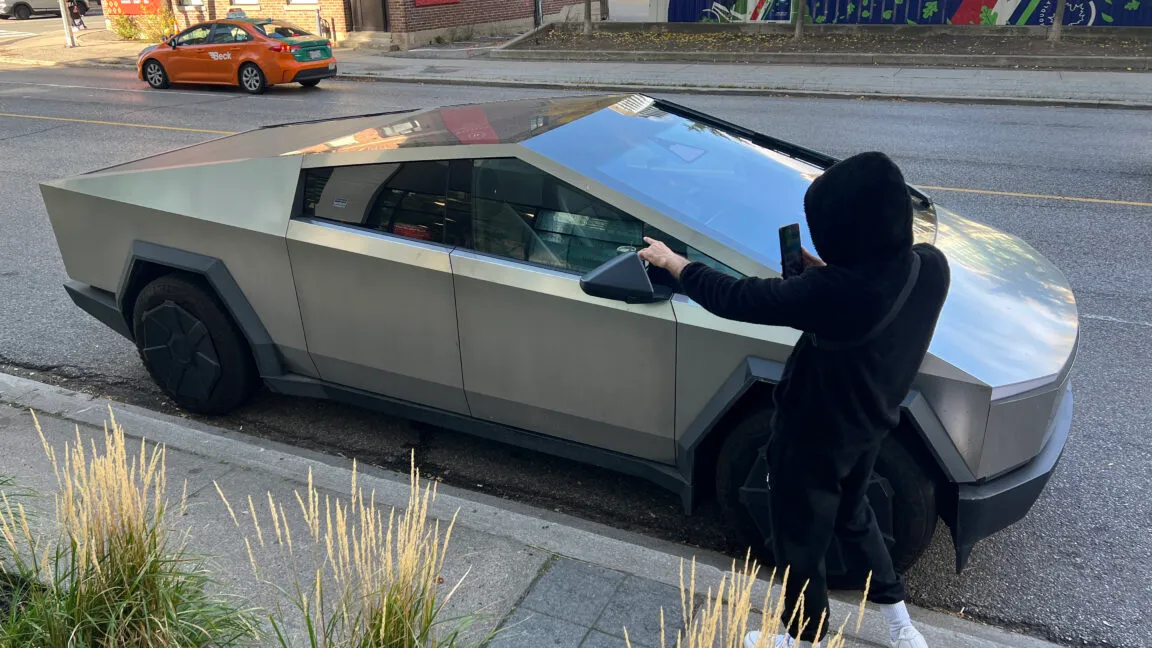
Tesla Cybertruck production end has been officially confirmed by CEO Elon Musk, who announced via social media that the electric pickup will cease manufacturing in the middle of 2027. This strategic shift aims to repurpose Tesla's factory capacity for the production of Cybercabs. Despite early ambitions to dominate the American pickup truck market, the Cybertruck struggled with sales and manufacturing complexities, leading Musk to acknowledge that the vehicle's development was a significant setback for the company. The pivot follows a period of intense scrutiny regarding the vehicle's stainless steel exoskeleton durability.
The transition from Cybertruck to Cybercab manufacturing
Tesla will officially end Cybertruck production in mid-2027, a move that signals a fundamental shift in the company's vehicle roadmap. According to Elon Musk, the cessation of the pickup truck line is intended to liberate factory space for other projects, most notably the Cybercab. This pivot follows years of attempting to integrate the angular, stainless steel vehicle into the broader automotive market, an effort that ultimately failed to meet the company's high-volume expectations.
The decision to move away from the Cybertruck comes after the vehicle failed to achieve the market ubiquity Tesla initially projected. While the company once aimed for the Cybertruck to mirror the mass-market success of the Model 3 and Model Y, the vehicle remained a niche product. The reallocation of manufacturing resources suggests that Tesla is prioritizing autonomous transport solutions over the traditional pickup segment.
Factory reallocation and strategic priorities
The transition of Tesla's production lines is a significant logistical undertaking. By ending the Cybertruck line, Tesla can redirect its massive manufacturing capacity toward the Cybercab, which represents a different segment of the electric vehicle market. This shift indicates that the company is moving away from the heavy, utilitarian focus of the pickup truck and toward a specialized, potentially autonomous, mobility service model.
The gap between original design promises and reality
The Cybertruck's development was characterized by a significant divergence between Elon Musk's initial technical claims and the final production model. When the vehicle was first revealed in late 2019, Musk proposed a stainless steel monocoque construction, suggesting that the body and bed would serve no traditional functional purpose. This design was intended to provide unique strength and lightness, similar to carbon-fiber monocoques used in racing.
However, the production version of the truck departed from these early specifications. Instead of the promised stainless steel monocoque, the vehicle utilized a conventional unibody chassis. This change was necessary to navigate the immense manufacturing hurdles that plagued the project. The original vision of a specialized, all-steel structural design proved impractical for mass-market scaling, leading to a product that was more conventional in its underlying architecture than its exterior suggested.
| Feature | Initial 2019 Vision | Actual Production Reality |
|---|---|---|
| Chassis Type | Stainless steel monocoque | Conventional unibody |
| Target Price | Under $40,000 | Not achieved as originally planned |
| Primary Goal | Unseat Ford F-150 | Niche/Specialized market presence |
Manufacturing struggles and the precision mandate
Tesla faced unprecedented difficulty in bringing the Cybertruck to mass production, a struggle that extended beyond the vehicle's unusual geometry. Elon Musk famously demanded "Lego-like precision" from factory workers, specifically citing the need for 10-micron tolerances. This level of precision is standard for high-end toy manufacturing but proved exceptionally difficult to maintain in a heavy automotive production environment.
The reality of the Cybertruck's assembly was often at odds with these high-precision requirements. Early consumer experiences and media reviews in 2023 highlighted significant issues, including various recalls and temporary stop-sale orders. These manufacturing setbacks prevented Tesla from achieving the seamless production flow seen with its previous models, the Model 3 and Model Y, which had already overcome their own significant scaling challenges.
The impact of production tolerances on quality
The insistence on extreme tolerances created a bottleneck in the production process. While the goal was to achieve a level of perfection associated with high-end engineering, the practical application in a large-scale factory resulted in delays and quality control issues. This friction between Musk's engineering ideals and the realities of automotive assembly lines contributed to the overall instability of the Cybertruck program.
Sales performance and market rejection
Despite Tesla's attempts to secure high-volume orders, the Cybertruck failed to reach the sales milestones required to justify its continued production. Musk had previously suggested that the company could see annual sales of a quarter of a million units, but these figures never materialized. Even large-scale institutional purchases, such as those made by SpaceX, were insufficient to bolster the truck's commercial viability.
The vehicle's market performance was also impacted by its polarizing nature. The Cybertruck became a visual symbol of Elon Musk's personal brand and his influence on federal governance. As public sentiment regarding Musk's political involvement shifted, the vehicle's divisive design became a liability. For many consumers, the truck was no longer just a vehicle, but a mobile reminder of a specific and controversial political vision, which hindered its ability to achieve broad consumer acceptance.
The "grave" of the Cybertruck project
In late 2023, Musk provided a rare moment of public candor regarding the vehicle's difficulties, stating that the company had "dug our grave" with the truck. This admission served as a precursor to the eventual decision to end production. It acknowledged that the ambitious goals set during the 2019 reveal—specifically the price point and the sales volume—were likely unattainable in the current market climate.
The political and cultural dimension of the brand
The Cybertruck's failure cannot be viewed solely through a technical or financial lens; it was also a cultural phenomenon. The vehicle's aesthetics and the CEO's public persona became inextricably linked. As the American electorate moved in directions that diverged from Musk's preferred governance models, the Cybertruck lost its status as a cutting-edge symbol and became a polarizing object of cultural debate.
The rejection of the Cybertruck in the mass market reflects a broader trend where the personal brand of a CEO can influence the commercial success of a product. For Tesla, the Cybertruck's legacy will likely be one of ambitious engineering that collided with the realities of manufacturing complexity and shifting cultural tides. The move toward the Cybercab represents an attempt to decouple Tesla's future from the controversies associated with the Cybertruck's identity.