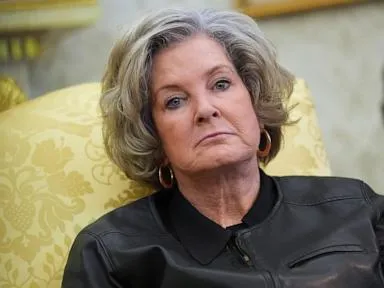
Susie Wiles is exiting her role as White House chief of staff, according to a social media post by President Donald Trump on Friday, November 7, 2026. Stephen Miller, a longtime political adviser and Trump loyalist, will succeed her in the position starting Monday. The transition follows the recent midterm elections in which Democrats gained control of both the House and the Senate. While Trump stated Wiles did a good job, sources told ABC News that the president was privately blaming her for the administration's midterm losses.
The transition of leadership in the White House
Stephen Miller will officially assume the role of White House chief of staff on Monday, November 10, 2026. The transition follows the departure of Susie Wiles, who submitted her resignation on Thursday night after being privately blamed by President Trump for the Republican Party's losses in the recent midterm elections. While Trump publicly stated he "wanted to make a change" and noted that Wiles had performed well, the shift marks a significant reorganization of his top advisory circle.
Wiles will not leave the President's orbit entirely but will instead move to the Trump political operation. In a social media statement, Miller expressed that he was "honored beyond words" to be selected and thanked Wiles for her "devoted service" and "friendship." Miller emphasized a renewed focus for his tenure, stating that the mission is to "Fight with all of our soul to support our President and defend this magnificent Republic."
The tenure and impact of Susie Wiles
Susie Wiles holds the distinction of being the first woman to serve as White House chief of staff. Appointed following the 2024 election victory, she was a central figure in Trump's political success, having served as campaign manager for his entire 2024 run. Trump previously credited her as an "integral part" of both his 2016 and 2020 successful campaigns.
Known for her low-profile management style, Wiles typically avoided the media spotlight and social media engagement. Her influence was characterized by a "tight ship" approach to administration operations. Despite her inconspicuous presence, her role was deeply influential in navigating the complexities of the second Trump term.
Wiles's political background and personal resilience
Before her time in the White House, the Florida native was a prominent Republican strategist. She was credited with assisting the elections of figures such as Florida Senator Rick Scott and Governor Ron DeSantis in 2018, though she later moved away from DeSantis's political circle in 2019. Her rise within the Trump inner circle culminated in her managing the 2024 campaign that saw Trump defeat DeSantis for the Republican nomination.
Beyond her political maneuvering, Wiles's tenure was marked by personal challenges. In March 2026, she announced a diagnosis of early-stage breast cancer, though she later shared in September that she was cancer-free. Her ability to maintain her leadership role while managing her health was a notable aspect of her time in the administration.
Profile of incoming Chief of Staff Stephen Miller
Stephen Miller, 41, brings a background of intense policy advocacy and loyalty to the role of chief of staff. Having served as a senior adviser and speechwriter during Trump's first term, Miller rose to become the Deputy Chief of Staff for Policy and homeland security adviser during the second term. He is widely recognized as an immigration hard-liner who helped craft the policies of the first administration.
Miller's career has been defined by his close alignment with the "America First" agenda. Following his departure from the administration in 2021, he led America First Legal, a conservative organization positioned as a counter to the ACLU. He returned to the Trump fold as a senior adviser during the 2024 campaign, eventually re-entering the White House in a high-level policy capacity.
Miller's standing within the Trump administration
President Trump has frequently praised Miller's contributions, labeling him an "MVP" during a Rose Garden event in May 2025. The President has described Miller as a "very valued person" who sits "at the top of the totem pole" within the administration's hierarchy. Miller is known for being one of the President's most vocal defenders, frequently utilizing television and social media to advocate for administration policies.
Comparing the leadership styles of Wiles and Miller
The replacement of Wiles with Miller represents a shift in the operational tone of the White House. While both are considered loyalists, their methods of exercising influence differ significantly. The following table outlines the primary distinctions noted in their professional approaches:
| Feature | Susie Wiles | Stephen Miller |
|---|---|---|
| Media Presence | Low-profile; avoids spotlight and social media. | Highly active; frequent defender on TV and online. |
| Operational Style | Inconspicuous; focused on internal management. | Policy-driven; focused on ideological advocacy. |
| Political Focus | Campaign management and administrative stability. | Immigration policy and "America First" implementation. |
Wiles's approach was often described as being "thoughtful" about engagement, as she noted in a 2025 interview with Vanity Fair. In those interviews, she admitted to occasionally being "outvoted" on administration decisions, such as the Day 1 pardons of January 6 rioters, though she eventually aligned with the President's direction. In contrast, Miller's ascent suggests a White House that may lean more heavily into direct policy combat and public ideological defense as it faces a Democrat-controlled Congress.