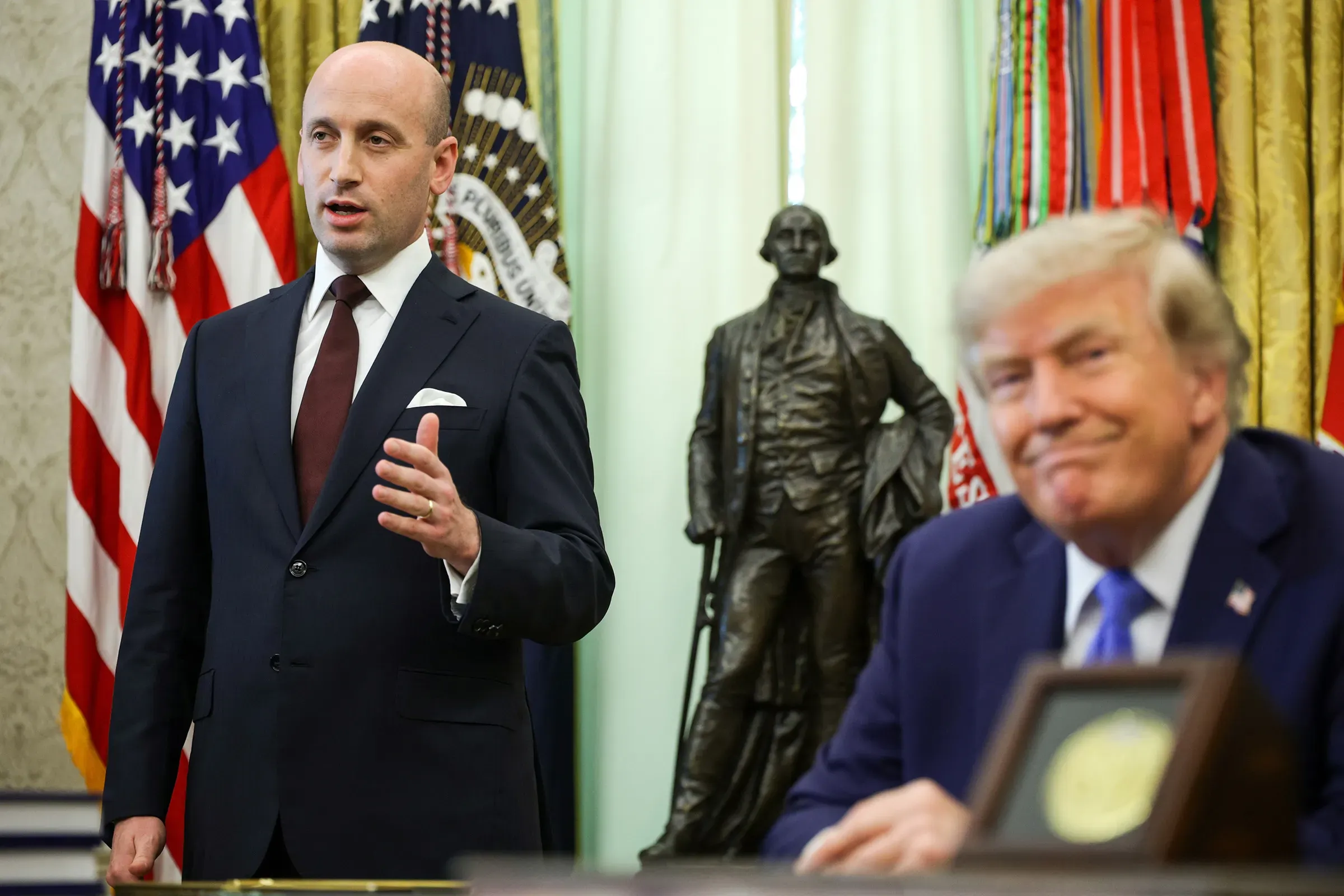
Stephen Miller will become the White House chief of staff following the resignation of Susie Wiles on Friday, November 7, 2026. President Donald Trump announced the transition on Truth Social, noting that Miller will take over the role on Monday. The appointment follows significant Republican losses in the midterm elections, where the party lost control of both the House and the Senate. Miller, previously the deputy chief of staff for policy and homeland security adviser, replaces Wiles after the President reportedly blamed her for the election performance.
The transition of power following midterm losses
Stephen Miller is set to assume the role of White House chief of staff on Monday, November 10, 2026, marking a significant shift in the Trump administration's internal hierarchy. The decision follows a period of intense political pressure after Republicans suffered major defeats in the midterm elections, losing both the House and the Senate. According to a statement posted by President Trump on his Truth Social platform, Miller will succeed Susie Wiles, who submitted her resignation on Thursday.
The leadership change comes at a time of heightened tension within the administration. Sources familiar with the matter indicate that Trump had privately held Wiles responsible for the Republican Party's poor midterm performance, which was described as one of the worst in decades. This blame preceded her formal departure from the West Wing.
The selection process for the new chief of staff
Before settling on Miller, the President reportedly considered several high-profile candidates to lead the White House operations. According to two sources familiar with the matter, the shortlist included:
- Steve Witkoff: Special envoy to the President.
- Jay Clayton: Director of National Intelligence.
- Stephen Miller: The current deputy chief of staff for policy and homeland security adviser.
The decision to select Miller appears driven by the administration's need for a loyalist capable of navigating the upcoming political landscape. With congressional investigations expected to begin next year, Trump prioritized Miller’s reputation for aggressive defense of his policy agenda and his deep-seated loyalty to the President.
The political profile and policy influence of Stephen Miller
Stephen Miller enters the chief of staff role as one of the most influential and polarizing figures in the second Trump administration. Known internally by the moniker "the prime minister," Miller has been a central architect of the administration's most controversial initiatives. His primary focus has historically been on immigration and homeland security, where he has orchestrated strict enforcement measures.
Miller's influence extends beyond domestic policy into military and international operations. He currently leads the Homeland Security Council within the White House and has demonstrated a capacity to coordinate closely with the Pentagon. For example, Miller and Defense Secretary Pete Hegseth worked in tandem last year during a campaign of strikes against vessels in the waters around Venezuela, an operation Miller orchestrated through the Department of Defense.
His tenure as deputy chief of staff for policy has been defined by a commitment to the President's "America First" agenda. This includes a crackdown on immigration that has been characterized by critics as brutal and has, in certain instances, resulted in the deaths of US citizens. His elevation to chief of staff signals a move toward even more assertive policy execution.
Internal shifts and the future of White House personnel
The departure of Susie Wiles is expected to trigger a broader series of personnel changes within the West Wing. As Miller takes control, several current aides are facing uncertain futures. Sources suggest that Wiles’ deputies, including James Blair—who managed the GOP midterm strategy—and Richard Walters, may be vulnerable to dismissal by Miller unless they choose to resign.
However, the reshuffle may also stabilize certain relationships within the cabinet. While Wiles had reportedly developed a strained relationship with Defense Secretary Pete Hegseth in recent months, Miller is viewed as being ideologically aligned with the Secretary. This alignment could lead to more seamless coordination between the White House and the Department of Defense.
| Official | Previous Role / Status | Relationship/Outlook with Miller |
|---|---|---|
| Stephen Miller | Deputy Chief of Staff / Homeland Security Adviser | Incoming White House Chief of Staff |
| Pete Hegseth | Defense Secretary | Ideologically aligned; expected closer coordination |
| James Blair | Wiles' Deputy (Midterm Strategist) | Reported to be vulnerable to dismissal |
| Richard Walters | Wiles' Deputy | Reported to be vulnerable to dismissal |
The administration is also navigating recent changes in communication leadership. Reports indicated that Trump hired Katie Zacharia as press secretary without consulting Wiles, a move that contributed to the perception that Wiles was losing influence prior to her resignation. While the White House has pushed back on claims regarding the lack of consultation, the incident highlighted the shifting dynamics of the West Wing.
The legacy and departure of Susie Wiles
Susie Wiles leaves the White House having served as one of the more stable chiefs of staff in the history of the Trump presidency. Unlike the first term, which was marked by frequent turnover in the chief of staff position, Wiles maintained the President's confidence from the start of his 2021 re-election campaign. Her tenure was characterized by a focus on border security, tax policy, and economic strengthening.
Despite her relative stability, Wiles' final months were marked by significant personal and political challenges. She successfully completed a course of chemotherapy while managing her duties. Additionally, she faced scrutiny regarding allegations that her daughter’s firm received lucrative contracts due to family connections to the President. The White House and the firm involved have both denied these allegations.
In her farewell message on the social media platform X, Wiles expressed her gratitude for the opportunity to serve. "Serving President Trump in the White House has been the honor of a lifetime," Wiles wrote. She also highlighted the administration's accomplishments in securing the border, cutting taxes, and pursuing an "America First" economic strategy.