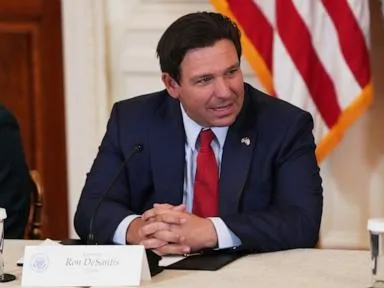
The potential for a Ron DeSantis 2028 presidential run remains an open question as the Florida Governor evaluates the current political climate. According to two people familiar with his thinking, DeSantis has not made a final decision regarding a future bid for the presidency. Following the recent midterm elections, he is monitoring whether a viable path exists for him to succeed within the Republican Party and the broader national landscape. His assessment follows a period of significant Republican losses, which he characterized as a massive political event affecting the country.
Evaluating the political landscape for a potential 2028 bid
Florida Governor Ron DeSantis is currently maintaining flexibility regarding his political future, according to two sources familiar with his deliberations. While the possibility of a Ron DeSantis 2028 presidential run is being discussed, the Governor is reportedly waiting to observe several critical variables before committing to a campaign. These factors include his personal performance in the current cycle, the availability of a clear political 'lane' for his candidacy, and his ability to provide unique value to the Republican Party and the United States.
This period of observation follows a series of high-profile media appearances by DeSantis, intended to reflect on the Republican Party's performance in the most recent midterm elections. Rather than retreating from the spotlight, the Governor has used these platforms to analyze the structural challenges facing the GOP. His approach suggests a strategic recalibration following the difficulties encountered during his previous attempt to secure the presidency.
Key considerations for a future campaign
Sources indicate that DeSantis's decision-making process is anchored in three primary assessments:
- Performance Viability: Determining if his political standing can translate into national momentum.
- Strategic Opportunity: Identifying a specific segment of the electorate or a policy niche that remains underserved.
- Party Utility: Evaluating whether he can offer the Republican Party a constructive direction following recent electoral setbacks.
The 'Meteor Strike' and Republican midterm setbacks
Ron DeSantis has been vocal in his critique of the Republican Party's recent midterm election performance, describing the scale of the losses as far exceeding a standard 'blue wave.' During a press conference held in Florida on Wednesday, the Governor characterized the election results as the "political equivalent of a meteor strike" that impacted the entire country, including both red and blue states. He specifically highlighted Florida's ability to resist these trends, stating that the state was able to "hold the line and withstand" the national shift.
His assessment of the national Republican situation was even more severe. DeSantis suggested that the losses were so significant they could be viewed as "close to an extinction-level event" for the party. This rhetoric serves to distance his Florida administration's success from the broader national trend of Republican decline, positioning him as a leader who managed to navigate a crisis that overwhelmed his colleagues in other jurisdictions.
| Term Used by DeSantis | Contextual Meaning |
|---|---|
| "Blue Wave" | A standard term for Democratic electoral gains, which DeSantis argued was an understatement. |
| "Meteor Strike" | A description of the widespread, destructive impact of election results across all US states. |
| "Extinction-level event" | A hyperbolic characterization of the potential long-term damage to the Republican Party. |
Critique of Republican messaging and voter engagement
A significant portion of DeSantis's analysis regarding the midterm failures centers on the quality of communication from Republican candidates. He argued that the party suffered from a lack of positive, substantive messaging that could resonate with voters. According to DeSantis, many candidates failed to provide a compelling vision or a message that successfully landed with the electorate, leaving a vacuum that the opposition was able to exploit.
Furthermore, DeSantis has criticized certain Republican figures for what he described as "gaslighting" voters, particularly concerning economic issues like gas prices. In an interview with Stephen A. Smith, DeSantis noted that the volatility in energy prices, influenced by the conflict in Iran, was a reality that voters felt directly. He argued that attempting to deflect blame entirely onto the Biden administration without acknowledging the factual causes of rising costs was a mistake that damaged the party's credibility.
The impact of economic honesty on voter trust
DeSantis emphasized that honesty regarding economic hardships is essential for maintaining voter loyalty. His critique focused on the following points:
- Direct Impact: Acknowledging that higher gas prices hurt working-class citizens.
- Causal Clarity: Recognizing that international conflicts, such as the war in Iran, play a factual role in domestic price fluctuations.
- Credibility Risks: Warning that if Republicans cannot admit these facts, voters will cease to trust their messaging on other critical issues.
Lessons from the 2024 presidential campaign
The current deliberation over a 2028 run is heavily influenced by the outcomes and internal dynamics of DeSantis's unsuccessful 2024 presidential bid. That campaign, which saw him run against President Donald Trump, ended when he dropped out of the race shortly before the New Hampshire primary. His performance in the Iowa caucuses, where he finished a distant second to Trump, also serves as a benchmark for his current strategic thinking.
The 2024 effort was defined by several complicating factors that DeSantis is reportedly seeking to avoid in any future endeavor. These include:
- Internal Friction: The campaign was notably marked by political infighting that drew intense national scrutiny.
- Financial Management: Despite receiving significant donor support, the campaign was complicated by instances of overspending.
- Media Engagement: A person familiar with DeSantis's thinking told ABC News that the Governor has recognized the necessity of increased media presence.
Crucially, the Governor has also learned the importance of timing. His previous campaign experience suggested that waiting too long to enter a presidential race can be detrimental to momentum, a lesson that may dictate the speed of his eventual decision regarding 2028.