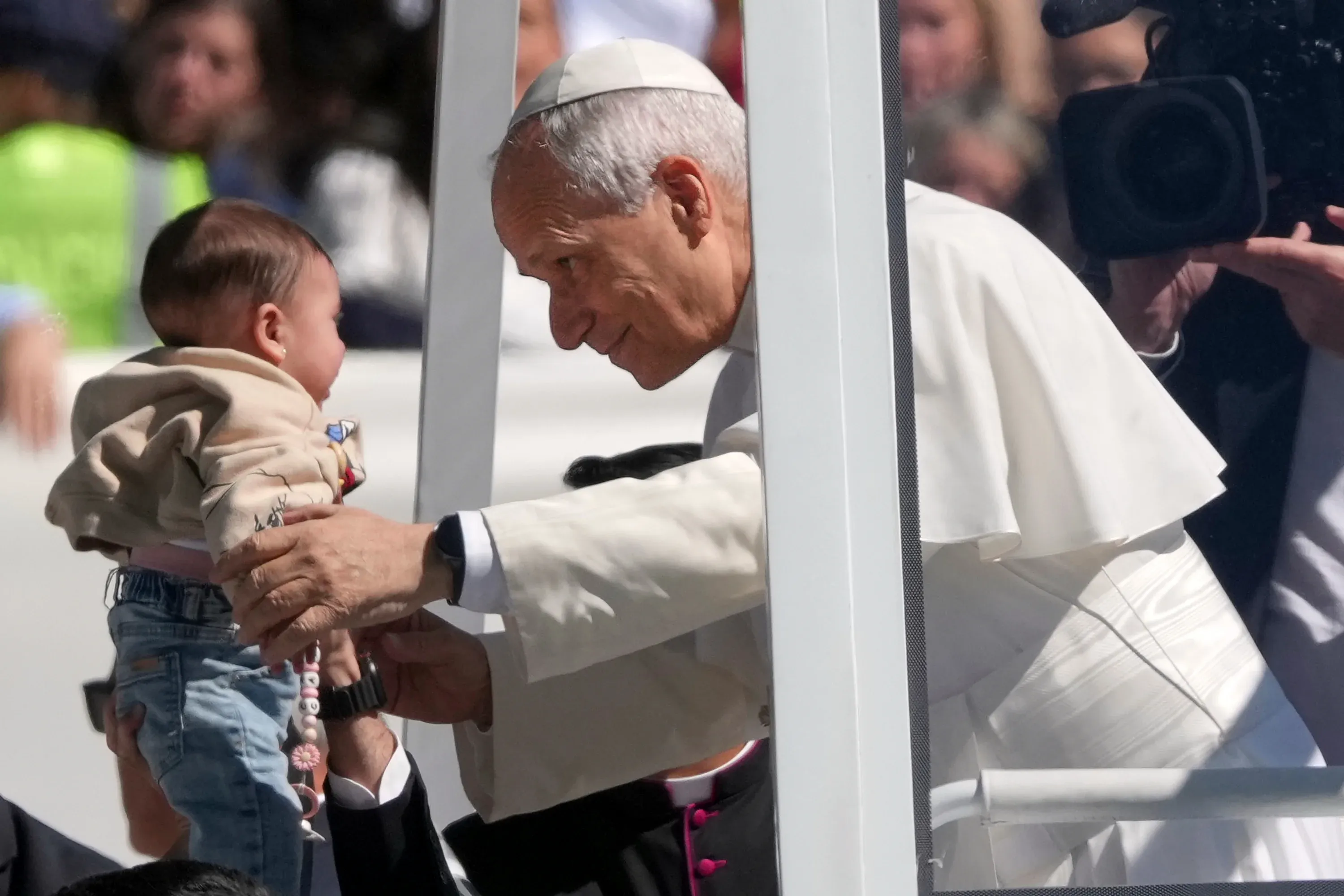
Pope Leo XIV concluded the first leg of his 12-day Pope Leo XIV South America tour on Sunday, November 8, 2026, by celebrating Mass in Florida, Uruguay. The visit to Uruguay, the region's most secular nation, served to emphasize the historical role of the Catholic Church in the country's identity. Following this successful stop, the Pontiff is traveling to Argentina, where he faces a politically delicate environment characterized by sharp disagreements between the Church and President Javier Milei's administration regarding austerity and social spending.
Faith and tradition in secular Uruguay
Pope Leo XIV concluded his Uruguayan visit by celebrating the feast of the Virgin of the Thirty-three in the city of Florida, north of Montevideo. This religious milestone allowed the Pontiff to address the nation's complex relationship with the Catholic Church, which has navigated a deeply secular and occasionally anticlerical landscape in recent decades. During the Mass, Leo highlighted the historical connection between faith and national identity, noting that the statue of the Virgin was present during the 1825 declaration of independence from the Brazilian empire.
The gathering in Florida's main square drew a crowd significantly larger than the city's 40,000 residents. According to Vatican estimates, approximately 50,000 people attended the Mass. Many pilgrims traveled several kilometers on foot to reach the site under clear skies. The event served as a platform for Leo to encourage the maintenance of religious traditions within families.
The role of women in religious continuity
In his homily, Leo specifically addressed the influence of women in preserving the Catholic faith. He praised mothers and grandmothers for their efforts in passing religious values to younger generations, even when those efforts faced challenges in an increasingly secular society. "You taught your children to pray, and today they no longer do so," the Pope remarked, acknowledging the pain felt by those who see declining church attendance in their families. He urged these women to remain persistent in their spiritual guidance.
Political tensions in Argentina's upcoming visit
The second leg of the apostolic journey takes Leo to Argentina, a stop expected to be the most politically sensitive of the tour. The Catholic Church has been a vocal critic of President Javier Milei's economic policies, specifically his aggressive austerity measures. While the Argentine government maintains that the papal visit is a purely religious matter, the ideological gap between the presidency and the Church remains wide.
Karina Milei, the president's sister and secretary-general of the presidency, addressed these concerns by stating that the Pope belongs to all Argentines rather than any specific political camp. However, the social implications of the current administration's policies provide a backdrop of tension for the upcoming meetings. The contrast between the Pope's focus on the vulnerable and the administration's economic overhaul is expected to define the visit.
| Issue | Church Position / Social Impact | Milei Administration Stance |
|---|---|---|
| Social Spending | Criticism of cuts to healthcare and education | Necessary reforms to achieve budget surplus |
| Poverty | Focus on the 32.3% of population in poverty | Cuts viewed as essential to eliminate waste |
| Artificial Intelligence | Calls for strict international safeguards | Promotion of investment through limited regulation |
Economic upheaval and the Church's critique
The friction between the Vatican and the Milei administration is rooted in the significant social shifts occurring in Argentina. Since taking office in December 2023, President Milei has implemented drastic budget reductions, including a 48% real-term cut to the national healthcare budget. These measures have contributed to a complex socio-economic landscape for the Argentine population.
According to official data, poverty in Argentina reached 32.3% of the population during the first half of 2026, affecting approximately 15 million people. The Church has historically advocated for those most impacted by these economic shifts. This tension is further complicated by differing views on technological advancement. While Pope Leo XIV has warned that the rapid AI race poses threats to both humanity and the environment, the Milei government has actively courted AI investment and data centers by promising a more deregulated environment.
The impact of austerity on public institutions
Beyond healthcare, the administration's approach to public services has sparked widespread domestic unrest. Planned cuts to the public university system, a cornerstone of Argentine national pride, have led to significant student protests. For the Church, which often mirrors the concerns of the marginalized, these cuts represent a direct challenge to the social fabric that the Pontiff seeks to protect.
Legacy and continuity of the Argentine papacy
Pope Leo XIV’s visit also represents a continuation of the work started by his predecessor, the Argentine Pope Francis. While Francis famously never returned to his home country during his 12-year pontificate, Leo is returning to the region to address the ongoing social and political polarizations that Francis left behind. The theological and social focus of Leo’s papacy—rooted in his background as a missionary priest in Peru—aligns closely with the legacy of the Argentine Jesuit.
David Lantigua, a theology professor at the University of Notre Dame, notes that there is significant disagreement regarding Francis's legacy in Argentina. Much of this debate stems from Francis's time as a priest in the slums of Buenos Aires, where he advocated for the poor. Because Leo XIV has made the vulnerable a central focus of his papacy, his presence in Argentina is likely to reignite discussions regarding the role of the Church in addressing the needs of the marginalized during times of crisis.
Security concerns and upcoming itinerary
The arrival of the Pope in Argentina is accompanied by heightened security measures following reports of potential threats. The Argentine state intelligence agency confirmed that an individual was arrested in connection with death threats made against Leo ahead of his arrival. A federal court in Campana, located approximately 70 kilometers northwest of Buenos Aires, ordered the arrest following a tip to the agency.
Following the initial welcome ceremony in Buenos Aires, where President Milei is expected to greet the Pope at the airport, the tour will eventually move toward Leo's personal history. Unlike Francis, who left his home country behind, Leo intends to conclude his 12-day journey by visiting Peru, the nation where he served as a missionary priest for two decades.