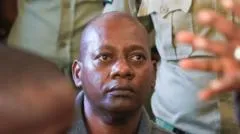
A Kenyan court has handed down the Paul Mackenzie sentence, sentencing the doomsday cult leader to 200 years in prison for the murders of 191 people. The victims were almost exclusively children, instructed by Mackenzie to starve to death to "meet Jesus." Justice Diana Mochache imposed 100 years for homicide and 100 years for starvation-related offences, to run consecutively. This ruling follows the 2023 discovery of over 400 bodies in shallow graves within the Shakahola forest near the Kenyan coast.
The legal breakdown of the 200-year prison term
The total 200-year term for Paul Mackenzie is the result of two distinct 100-year sentences that the court ordered to run consecutively. While the sentences within each specific category of crime will run concurrently, the two sets of sentences are separate legal penalties. Justice Diana Mochache ruled that Mackenzie bore the "primary criminal culpability" for the deaths, which she described as part of one of the world's deadliest episodes of cult activity.
The sentencing structure is as follows:
- Homicide: 100 years in prison.
- Starvation-related offences: 100 years in prison.
Although prosecutors had requested the death penalty, arguing that the scale and circumstances of the killings justified the harshest possible punishment, Justice Mochache declined the request. The judge noted that while the case met the threshold for capital punishment, the court chose to decline the invitation to impose it on any of the victims. The judge's reasoning was that the death penalty would eliminate any potential for rehabilitation and disengagement. It is worth noting that Kenya has not carried out a death sentence since 1987.
Accomplices and varying sentences
Mackenzie did not stand alone in the dock; he was tried alongside 28 accomplices who played specific roles in the cult's operations. These individuals included guards who enforced the fasting orders and gravediggers who assisted in concealing the bodies in mass graves. The court handed down varying prison sentences to these co-accused, with some receiving terms as long as 160 years. The judge characterized the killings as "cold and calculated," noting that the perpetrators had shown no remorse and had even expressed a willingness to fast to death themselves.
The mechanism of the Shakahola killings
The deaths in the Shakahola forest were the result of an organized system of religious indoctrination and physical enforcement. Mackenzie, who followers believed was "Jesus's mouthpiece," used specific theological directives to compel his devotees to fast to death. The court heard how burials within the forest were referred to as "weddings," and those who died were celebrated as having "wedded with Jesus."
The enforcement of these directives was often violent. One of the co-accused testified that followers who resisted the fasting orders were to be "forced to go to heaven through kicks and blows." Those who opposed Mackenzie's teachings were reportedly beaten to death. Post-mortem examinations provided a grim technical overview of how the victims died:
| Cause of Death | Details |
|---|---|
| Starvation | The primary cause for the majority of victims. |
| Suffocation | Identified in several cases. |
| Strangulation | Identified in several cases. |
| Head Injuries | Resulting from physical violence. |
| Undetermined | Due to advanced decomposition or death shortly after rescue. |
The physical state of the victims was extreme; many were so emaciated that they died shortly after being rescued from the forest. In other instances, the bodies had decomposed to the point where the exact cause of death could not be established.
The rise and fall of Good News International Ministries
Paul Mackenzie's influence grew through Good News International Ministries, a church he established in 2003. Over the following 16 years, the organization expanded significantly, attracting thousands of followers across various branches in Kenya. The ministry utilized media to spread its reach, including a television station known as Times TV, which broadcasted Mackenzie's sermons from Malindi.
The content of these sermons often focused on "End Days" themes and conspiracy theories. Mackenzie's teachings included the following claims:
- Education was described as "evil."
- Healthcare was characterized as being "against the doctrine."
- Digital identity cards were labeled as "the mark of the devil."
The movement's trajectory shifted in 2019 when the main church shut down, leading Mackenzie to move his operations into the Shakahola forest, where he encouraged his most devoted followers to join him. This transition from a public ministry to a secluded forest cult set the stage for the tragedy discovered in 2023.
Failures in oversight and law enforcement
The Shakahola tragedy has highlighted significant gaps in the oversight of religious activities in Kenya. While the cult's activities were widespread, they continued largely unchecked for years. Investigations by the state-funded Kenya National Commission on Human Rights (KNCHR) suggested that local administration and law enforcement officials had repeatedly ignored signs of the cult's activities.
Francis Wanje, a relative who lost eight family members, including two grandchildren, highlighted the perceived inaction of the authorities. Wanje had reported the case to the police in March 2023, but he stated that the expected immediate rescue of members did not occur. He noted that his grandson was only saved because a relative in the police force, who was also a former cult participant, intervened. According to Wanje, the child was able to show police the graves of his siblings, and he believed the child would have been killed had the intervention not taken place.
The legal and political response to the crisis included several attempts at accountability:
- Presidential Inquiry: President William Ruto established a commission of inquiry to investigate the matter, though this was later declared unconstitutional.
- Criminal Prosecution: The trial of Mackenzie and his 28 accomplices.
- Human Rights Investigation: The KNCHR's findings regarding the complicity or negligence of local officials.
Despite the convictions, a significant gap remains between the legal outcomes and the scale of the tragedy. While the court has sentenced Mackenzie for the murders of 191 people, more than 400 bodies were exhumed from the Shakahola forest during the investigation, leaving the fate of many victims unaddressed by this specific legal proceeding.