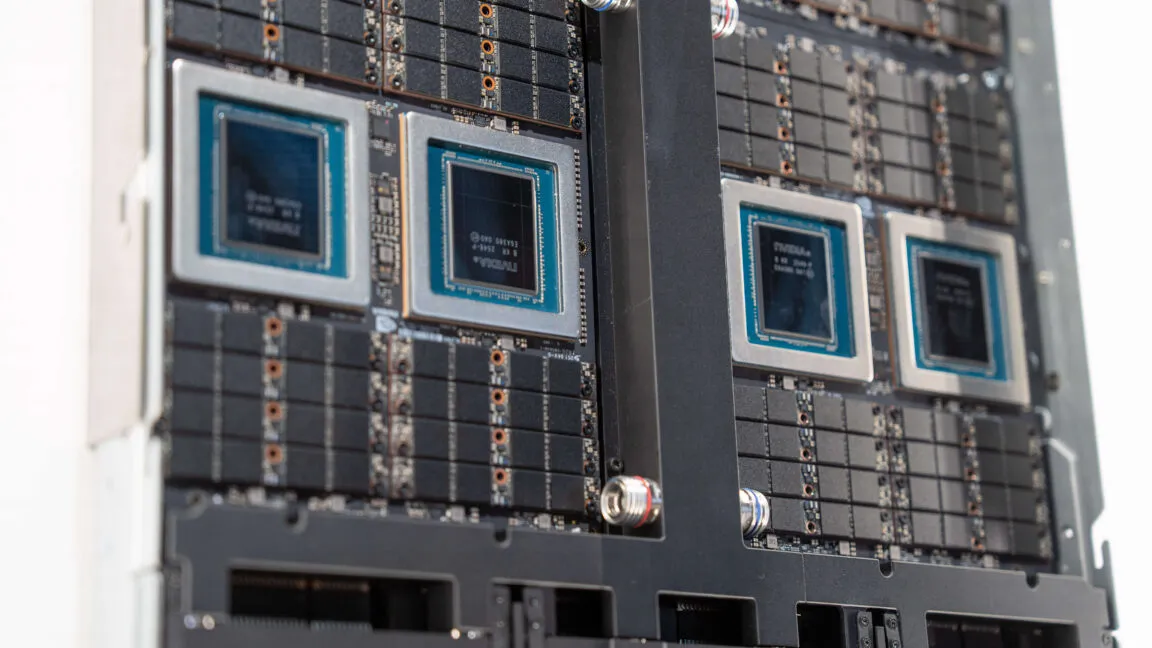
A major Nvidia hardware theft involving six pallets of equipment valued at $11.4 million occurred during transit between Oakland, California, and Fort Worth, Texas. The shipment, which departed on August 29, disappeared after being picked up by a truck displaying a food transportation company's logo. More than two months after the incident, Oakland police have confirmed that no arrests have been made and the cargo remains unrecovered. This theft is part of a broader trend of sophisticated hardware heists targeting high-value semiconductor components.
The disappearance of the $11.4 million shipment
The theft was discovered in early September when the intended buyers realized the shipment had never arrived at its destination in Fort Worth. The six pallets of unknown Nvidia equipment had left Oakland on August 29, reportedly loaded onto a vehicle bearing the logo of a food transportation company. While the truck was initially picked up as scheduled, it subsequently went off the grid, leaving investigators with little immediate trail.
Law enforcement officials attempting to reconstruct the timeline of the disappearance noted several irregularities in the vehicle's movement. According to police investigations, the truck made several multi-hour stops after departing with the hardware. The vehicle was eventually lost from tracking systems in San Bernardino County, California. Oakland police confirmed that a grand theft report was officially filed on September 13, and the investigation into the missing $11.4 million in equipment remains active.
Specific details regarding the exact nature of the Nvidia hardware stolen have not been released by authorities. This lack of clarity extends to the specific methods used to intercept the shipment, though the pattern of the truck's stops suggests a calculated diversion rather than a spontaneous incident.
A growing trend of sophisticated hardware heists
This incident is not an isolated event but part of an escalating wave of high-value technology thefts. Recent reports indicate that thieves have successfully stolen more than $100 million in similar hardware shipments since June. The scale and execution of these crimes suggest a shift toward organized criminal operations targeting the semiconductor supply chain.
Investigators cited by NBC News have identified specific professional techniques used by these theft rings to evade detection. These methods include:
- GPS Location Spoofing: Manipulating tracking data to mislead law enforcement and owners about the actual location of the cargo.
- Tactical Interceptions: Arranging collisions with police escort vehicles to disrupt security protocols.
- Logistical Planning: Using legitimate-looking branding, such as food transportation logos, to facilitate the initial pickup of high-value goods.
The increasing complexity of these operations points to a high level of intelligence and preparation. Criminal groups are no longer merely opportunistic; they are actively studying transport routes and security measures to maximize the success of their extractions.
Economic incentives and the gray-market demand
The high profit margins associated with stolen semiconductor components serve as a primary driver for these increasingly bold heists. Because high-end chips are in massive demand globally, the delta between domestic costs and international black-market prices is significant. Stolen components are often stripped down or sold through gray-market transactions to obscure their origins.
Professor Olaf Groth of the UC Berkeley Haas School of Business highlighted the massive financial incentive for these crimes. According to Groth, if a single chip is valued at approximately $550,000, the resale value can exceed $1 million when sold abroad. This massive markup incentivizes the professionalization of hijacking teams.
The mechanics of the semiconductor black market
The destination for stolen hardware is often overseas, where access to advanced U.S. technology may be restricted by trade regulations or sanctions. By moving components through complex international networks, criminal organizations can bypass the standard oversight applied to legitimate tech sales. This creates a lucrative cycle where the risk of high-stakes hijacking is offset by the massive returns found in restricted markets. As cargoes grow in size and value, the sophistication of the teams required to move them increases accordingly.
>$100 million| Incident Type | Estimated Value / Detail | Location / Context |
|---|---|---|
| Oakland-Texas Shipment | $11.4 million | 6 pallets of Nvidia hardware |
| Fremont/Union City Burglaries | >$7.5 million | Nvidia hardware (2025) |
| Recent Industry Trend | Total stolen since June 2026 |
Historical context of Nvidia hardware targeting
Nvidia's specialized hardware has become a recurring target for organized theft groups. In 2025, police investigated a series of burglaries involving Nvidia equipment valued at more than $7.5 million in the Fremont and Union City areas of California. These incidents demonstrate that the focus on high-end AI and computing hardware is a sustained trend rather than a recent development.
In the 2025 California burglaries, investigators believed the thefts were executed by a coordinated group. This group reportedly secured vehicles in Southern California before traveling north to the Bay Area to conduct the heists. This pattern of long-distance planning mirrors the logistical sophistication seen in the recent Oakland shipment disappearance, where vehicles and routes are prepared well in advance of the target acquisition.
Failed heists and security simulations
While many heists are successful, the high-stakes nature of these crimes occasionally leads to significant errors by the perpetrators. Not every attempt to intercept high-value hardware results in a successful theft, sometimes due to the presence of security measures designed to thwart criminals.
In a September incident reported by Wired, two trailers marked with Nvidia and PlusAI logos were stolen from a California warehouse facility. However, when police recovered the trailers nearby, they discovered they contained no high-value electronics. Instead, the trailers were loaded with 20,000 pounds of sand.
The sand was not a mistake by the thieves, but rather a security measure implemented by the companies involved. PlusAI, a company developing autonomous trucking solutions in collaboration with Nvidia, uses sand to simulate the weight of a legitimate freight load. This ensures that if a trailer is stolen, the criminals find only weight rather than the valuable components they intended to acquire. This practice highlights the growing tension between logistics providers and the criminal elements targeting their cargo.