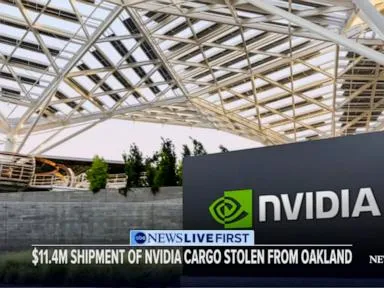
A major Nvidia cargo theft involving a shipment valued at $11.4 million occurred in Oakland, marking a significant high-value hardware heist. The theft targeted high-end computer hardware, which experts have characterized as a sophisticated cargo operation. While the specific logistics of the heist are still being analyzed, the scale of the loss underscores the increasing vulnerability of high-demand semiconductor shipments to organized criminal activity. This incident has drawn intense attention to the security of critical technology supply chains during transit, especially as high-value electronics become prime targets for professional theft rings.
The scale of the $11.4 million Nvidia cargo theft
The theft of Nvidia hardware in Oakland represents a massive financial loss, with the stolen shipment valued at approximately $11.4 million. This specific type of Nvidia cargo theft targets high-demand, high-value components that are essential to the current global artificial intelligence and computing infrastructure. The sheer value of the cargo suggests that the perpetrators were specifically tracking high-value shipments of semiconductor technology.
Law enforcement and logistics security analysts are currently evaluating the circumstances surrounding the disappearance of the goods. The loss of such a substantial amount of hardware impacts not only the immediate financial standing of the involved parties but also highlights the risks inherent in the movement of critical technology assets across major transit hubs like Oakland.
Impact on the technology supply chain
When high-value shipments like those from Nvidia are intercepted, the ripple effects can be felt throughout the technology sector. Beyond the immediate $11.4 million loss, such thefts can lead to increased insurance premiums for logistics providers and more stringent, potentially slower, security protocols for future shipments. The targeting of Nvidia hardware specifically points to a market where stolen components can be quickly liquidated or diverted into secondary, unregulated markets.
Expert analysis of the Oakland cargo heist
Experts describe the computer hardware theft as a sophisticated cargo heist rather than a random act of opportunistic crime. This distinction is critical, as it implies that the thieves likely possessed detailed knowledge of the shipment's contents, its route, and its timing. A sophisticated heist typically involves coordinated efforts to bypass security measures, intercept vehicles, or manipulate logistics documentation.
The professional nature of the operation suggests several possibilities that investigators are likely pursuing:
- Pre-operational surveillance of the shipment's transit route.
- The use of advanced methods to disable tracking devices or GPS monitoring.
- Coordinated team movements to ensure a rapid extraction of the cargo.
By classifying this as a sophisticated heist, security professionals are signaling to the industry that traditional cargo security measures may be insufficient against organized groups targeting the semiconductor industry.
Security implications for high-value hardware shipments
The Nvidia cargo theft serves as a warning for the broader technology industry regarding the security of high-value hardware during transit. As the demand for AI-capable chips and advanced computing components continues to rise, the incentive for organized crime to intercept these shipments increases proportionally. This creates a high-stakes environment for logistics companies tasked with moving billions of dollars worth of sensitive technology.
To mitigate these risks, companies are increasingly looking toward advanced technological solutions. However, the Oakland incident demonstrates that even with standard protections, sophisticated actors can successfully execute large-scale thefts. The intersection of high market value and the portability of high-end chips makes this sector a primary target for organized theft.
| Theft Characteristic | Description |
|---|---|
| Estimated Value | $11.4 Million |
| Targeted Goods | Nvidia Computer Hardware |
| Location | Oakland, California |
| Methodology | Sophisticated Cargo Heist |
The broader context of semiconductor security
This incident occurs amidst a period of intense scrutiny over the global semiconductor supply chain. While much of the public discourse focuses on geopolitical tensions and manufacturing capacity, the physical security of the supply chain remains a critical, often overlooked, vulnerability. The theft of Nvidia cargo in Oakland highlights that the "last mile" or the transit phase of the supply chain is a high-risk period for hardware assets.
As companies scale their operations to meet the needs of the AI revolution, the physical movement of these components becomes a logistical challenge of both scale and security. The Oakland heist underscores the need for a multi-layered approach to security that includes not just digital protections for tracking, but physical hardening of the transport process itself.