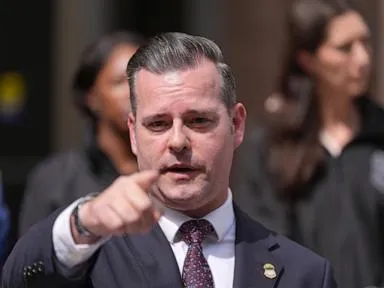
The Jason Reding Quinones resignation marks a significant departure within the Department of Justice as the U.S. attorney for the southern district of Florida steps down. Attorney General Todd Blanche announced on Friday, November 6, 2026, that Quinones is leaving alongside John Eisenberg, the top official overseeing the National Security Division. These departures follow the recent resignation of Harmeet Dhillon from the Civil Rights Division, occurring in the wake of historic Democratic midterm victories. The exits come as the DOJ continues its controversial 'grand conspiracy' investigation into whether government actors conspired to violate President Trump's civil rights.
The impact of the Jason Reding Quinones resignation on the conspiracy probe
The resignation of Jason Reding Quinones removes the lead official responsible for the DOJ's sweeping and controversial conspiracy probe targeting President Donald Trump's perceived political adversaries. This investigation seeks to determine if intelligence officials and other government actors engaged in a criminal effort to violate the President's civil rights, a matter dating back to his 2016 campaign. Despite the scale of the inquiry, the probe has yet to result in any criminal indictments.
While the investigation has triggered significant legal activity, including intense battles over subpoenas and grand jury testimony, it has faced criticism regarding its tangible outcomes. Sources indicated that the lack of indictments has been a primary source of frustration for both President Trump and senior officials within the Department of Justice. The departure of Quinones, who was tasked with managing this specific legal front, introduces uncertainty regarding the future direction and momentum of the investigation.
Investigation status and legal challenges
The 'grand conspiracy' probe has primarily functioned through behind-the-scenes legal maneuvering rather than public prosecutions. This phase of the investigation has been characterized by:
- Extensive legal wrangling over the issuance and enforcement of subpoenas.
- Contested grand jury testimony from various government and intelligence personnel.
- A lack of formal criminal charges or indictments to date.
This procedural stalemate has contributed to the political pressure surrounding the investigation, as the administration seeks concrete results from the inquiry into the 2016 campaign era.
Details regarding John Eisenberg's departure from the DOJ
John Eisenberg, the top official overseeing the Justice Department's National Security Division, has also resigned from the department. His departure, announced simultaneously with Quinones, represents a major shift in the leadership of the division responsible for handling some of the most sensitive matters in federal law enforcement.
Eisenberg’s tenure was marked by significant shifts in departmental priorities. Under his oversight, the National Security Division experienced a substantial reassignment of personnel. Resources were moved away from traditional focus areas such as terrorism, espionage, and foreign interference, and redirected toward the Trump administration's immigration enforcement priorities. This reallocation of expertise and manpower has fundamentally altered the division's operational landscape.
National Security Division history and recent cases
The National Security Division has been at the center of several high-profile legal matters during this period. Key activities and cases associated with the division include:
- The classified documents prosecution involving former national security adviser John Bolton, to which Bolton pleaded guilty earlier this year.
- Various leak investigations that resulted in the subpoenaing of several journalists.
- The management of counter-intelligence and foreign interference probes, which saw a shift in personnel focus.
Contextualizing the recent wave of DOJ resignations
The exits of Reding Quinones and Eisenberg are part of a broader trend of high-level departures within the Department of Justice following recent political shifts. These resignations follow the departure of Harmeet Dhillon, a longtime Trump ally, from the department's Civil Rights Division on Thursday. This sequence of departures has occurred in the context of historic midterm wins by Democrats, suggesting a period of transition or instability within the administration's legal apparatus.
The departure of these officials can be viewed through two distinct lenses: political shifts following election results and internal performance evaluations. While the timing aligns with the changing political landscape, specific internal pressures also played a role in the leadership changes at the DOJ.
| Official | Role | Status |
|---|---|---|
| Harmeet Dhillon | Civil Rights Division | Resigned (Thursday) |
| Jason Reding Quinones | U.S. Attorney, Southern District of Florida | Resigned (Friday) |
| John Eisenberg | Head of National Security Division | Resigned (Friday) |
Internal pressures and the circumstances of Quinones' exit
According to sources, the resignation of Jason Reding Quinones was viewed as a foregone conclusion in the weeks leading up to the announcement. The U.S. attorney faced internal scrutiny from DOJ leadership regarding the management and efficacy of his office's work.
Reports indicate that leadership within the Department of Justice had held private meetings with Quinones to admonish him. These reprimands were specifically focused on two areas: a perceived lack of progress in the 'grand conspiracy' investigation and his frequent travel to Washington, D.C. While Attorney General Todd Blanche expressed gratitude for Quinones' work in other areas, the internal dissatisfaction regarding the conspiracy probe appears to have been a decisive factor.
Attorney General Todd Blanche's response
In a social media post announcing the departure, Attorney General Todd Blanche provided a characterization of Quinones' service that focused on traditional law enforcement duties rather than the conspiracy investigation. Blanche stated, "We are grateful for Jason's leadership in combatting violent crime, drug trafficking, sex trafficking, and transnational crime." This acknowledgment highlights the dual nature of Quinones' role, which balanced regional criminal prosecution with the high-profile, politically sensitive conspiracy probe.