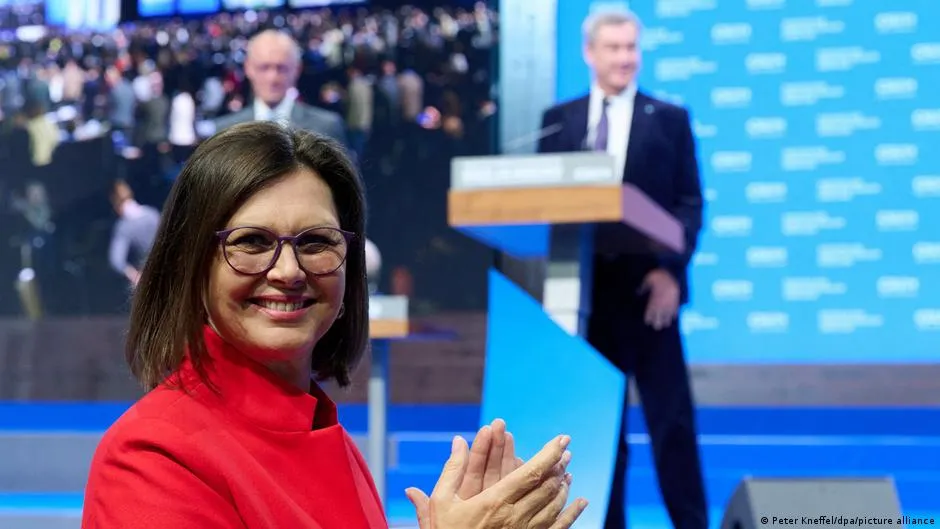
Ilse Aigner German president candidacy is gaining momentum as the CDU and CSU prepare to nominate a joint candidate for the upcoming election. According to reports from Spiegel, Süddeutsche Zeitung, and the DPA news agency, the Christian Democrats intend to back the Bavarian politician. If confirmed, Aigner would become the first woman to serve as the head of state in post-war Germany. The election will take place in late January 2027 via the Bundesversammlung, following the conclusion of Frank-Walter Steinmeier's second term.
The push for a unified CDU/CSU nomination
The Christian Democrats (CDU) and their Bavarian sister party, the CSU, are moving toward a unified nomination for the next German presidency. While the CSU has long favored Ilse Aigner, recent reports suggest the CDU leadership is now aligned with this choice. According to the DPA news agency, Chancellor Friedrich Merz is expected to officially recommend Aigner during a CDU leadership meeting scheduled for Sunday and Monday in Berlin.
Although party officials have declined to confirm or deny the specific reports on the record, the momentum behind a joint candidate appears significant. A unified front between the two sister parties aims to consolidate support ahead of the formal vote. This strategic alignment is designed to present a single, strong candidate to the special assembly responsible for the election.
Strategic coordination between Berlin and Munich
The coordination between the federal CDU and the Bavarian CSU is a critical component of this candidacy. By aligning their interests, the two parties seek to avoid a split vote that could weaken their influence within the Bundesversammlung. This cooperation is essential for securing the necessary majorities in a committee that includes representatives from various political factions and regional interests.
Political support from the SPD and potential Green cooperation
The Social Democrats (SPD), the CDU/CSU's junior coalition partners, have signaled their willingness to support an Aigner candidacy. SPD chairman Lars Klingbeil stated in Berlin that if the CDU steering committee officially puts forward Ilse Aigner on Monday, the SPD would welcome and support the move. This cross-party openness significantly increases the likelihood of a successful election outcome.
Beyond the SPD, Chancellor Merz is expected to seek additional support from the Green party. The Greens have historically advocated for increased female representation in high-level political offices. Given that the Greens are unlikely to field a successful independent candidate for the presidency, they may find common ground in supporting Aigner. If the CDU/CSU and SPD combine their influence, they will hold a majority of approximately 50 seats in the electing committee.
The role and election process of the Bundesversammlung
The German president is elected by the Bundesversammlung, a special federal assembly that meets to choose the head of state. The next election is scheduled for January 30, 2027. This body is composed of two distinct groups of voters to ensure both federal and regional representation.
| Voter Group | Composition Details |
|---|---|
| Bundestag Members | All 630 members of the German federal parliament. |
| State Representatives | 630 individuals assigned to represent the German states, weighted by population. |
| Other Representatives | Municipal politicians and individuals from various public sectors. |
The weighting of state representatives ensures that the interests of the various Länder are reflected in the election. While the presidency is a ceremonial role with primarily symbolic power, the election process itself is a major constitutional event. The bulk of legislative and political authority remains with the Chancellor, but the President serves as a vital figurehead for the nation.
Ilse Aigner's political background and qualifications
Ilse Aigner, 61, brings extensive legislative and executive experience to her potential candidacy. Currently serving as the speaker of the Bavarian state parliament, her career has spanned both regional and federal levels. Her professional trajectory includes significant roles in the German government and the Bavarian legislature.
A career in Bavarian and federal politics
Aigner's political journey began in the Bavarian legislature in 1994, followed by a move to the Bundestag in 1998. She later returned to the Bavarian chamber in 2013. Notably, she served a five-year term as the federal agriculture minister under former Chancellor Angela Merkel. This background provides her with a deep understanding of both the administrative requirements of the federal government and the specific political nuances of the Bavarian state.
Personal profile and early life
Born as the youngest of four sisters to an electrician, Aigner worked in her family's business before entering the political arena. She is a Roman Catholic and is currently single with no children. Her transition from the private sector to high-level governance is a key element of her public profile as she seeks to become the 13th person to hold the office of German president.
Succession following Frank-Walter Steinmeier
The move to elect a new president follows the conclusion of Frank-Walter Steinmeier's second five-year term. Steinmeier, a prominent figure for the Social Democrats before assuming the presidency, took office in March 2017. His departure from the role necessitates the upcoming transition in early 2027.
If Aigner is successful, she will break several historical precedents. She would be the first woman to hold the office of German head of state in the post-war era and the first politician from the CSU to occupy the position. This would mark a significant shift in the demographic and party representation of the German presidency, which has traditionally been held by members of other political backgrounds.