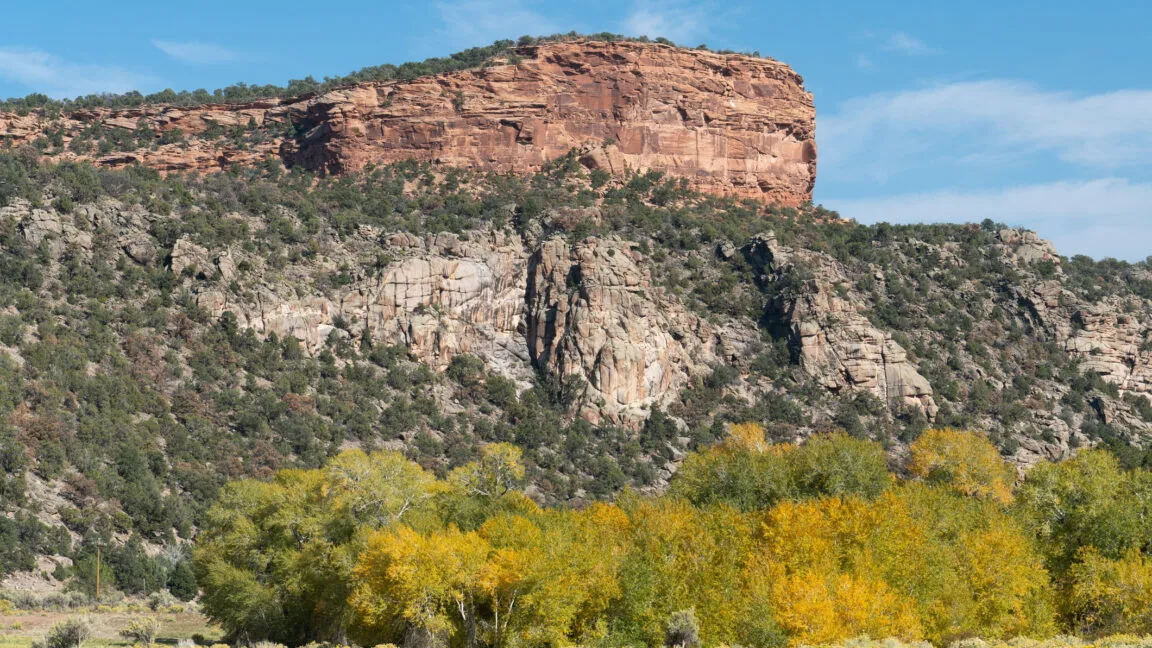
The Great Unconformity represents a massive gap in the geologic record where Cambrian deposits sit directly atop much older crystalline rocks. This phenomenon, which can represent a temporal void of over a billion years, may have been driven by deep-seated mantle processes. According to a recent Nature study by researchers at the University of Wollongong, slow currents of hot rock in Earth's mantle pushed entire continents upward, allowing glaciers to scour the surface before the land eventually sank to be buried by new sediments.
The nature of the missing geologic record
The Great Unconformity is characterized by a profound absence of rock layers that should exist between ancient basement rocks and younger sedimentary deposits. In locations such as the Grand Canyon, this boundary marks the transition from ancient crystalline structures to the sandstones deposited during the Cambrian explosion. The scale of this temporal gap varies significantly depending on the location, ranging from 200 million years to more than a billion years, according to geoscientist Nicolas Flament of the University of Wollongong.
Geologists have identified this unconformity across vast stretches of the planet, most notably throughout North America, as well as parts of northern Europe and northern China. The oldest sediments currently resting upon the Great Unconformity in North America date back to between 482 and 635 million years ago. While the presence of the gap is undisputed, the mechanism that stripped away the intervening rock layers has remained a subject of intense scientific debate.
Geological implications of the gap
The significance of the Great Unconformity lies in its ability to act as a fingerprint for planetary-scale processes. Because the gap represents such a vast stretch of time, it suggests that a high-energy event or a sustained period of erosion must have occurred to remove hundreds of millions of years of potential sedimentary history.
Evaluating traditional theories of erosion
For years, scientists have proposed several mechanisms to explain the disappearance of these rock layers, including rifting, sea-level fluctuations, and intense glaciation. The most prominent theory involves the 'Snowball Earth' scenario, which suggests that between 720 and 635 million years ago, glaciers reached the tropics and potentially froze the entire planet. Nicolas Flament notes that ice sheets are exceptionally effective at erosion, being approximately 10 times more efficient at scouring rock than river systems.
However, the glaciation theory faces a geographical challenge. If a global freeze was the sole cause, the Great Unconformity should be universally visible across all continents. In reality, the feature is most prominent in North America and parts of Eurasia, but less apparent in other regions. Other theories, such as continental rifting or global sea-level drops, also struggle to explain the specific distribution of the unconformity. Rifting typically occurs at continental margins rather than across entire landmasses, and sea-level changes would theoretically impact all continents in a more uniform manner.
Mantle convection and dynamic topography
A fourth hypothesis, known as dynamic topography, suggests that the movement of the Earth's mantle itself is responsible for the vertical movement of continents. The mantle, extending from roughly 100 to 3,000 kilometers beneath the surface, undergoes slow convection. Flament describes this process using the analogy of a lava lamp, where hot rock rises and cold rock sinks. This movement exerts physical force on the crust: where cold slabs of ocean floor sink at subduction zones, the crust is pulled downward, and where hot mantle rises, the surface is pushed upward.
While the exact amplitude of this vertical motion is still being determined, Flament indicates it reaches several hundred meters. To test this, Dhungana and Flament conducted six simulations of mantle convection spanning the last billion years, using reconstructions of tectonic plate movements. They sought to identify regions where the ground experienced specific patterns of rising and falling that would allow an unconformity to form and subsequently survive to the present day.
Simulated continental movement patterns
The simulations provided a consistent narrative for the movement of ancient landmasses. For example, the models showed that Laurentia—the ancient core of North America—experienced very little subduction along its margins between 930 and 510 million years ago. This lack of subduction allowed it to sit above rising mantle, causing the continent to be pushed upward.
The results of the simulations can be summarized by how different continental regions responded to these mantle-driven cycles:
| Region | Mantle-Driven Pattern | Unconformity Visibility |
|---|---|---|
| North America (Laurentia) | Long period of uplift followed by Cambrian sinking | High (Very obvious) |
| Northern Europe & N. China | Long uplift followed by sinking | Moderate to High |
| South America & Australia | Two distinct cycles of rise and fall | Low (Difficult to see) |
| Africa | Shaped by mountain belt erosion | Low (Not mantle-driven) |
The synergy of uplift and glacial scouring
The research suggests that mantle movement alone was not sufficient to create the Great Unconformity. While the uplift caused by dynamic topography could tilt a continent, Flament argues it was not powerful enough to create the steep slopes required for massive erosion. Instead, the phenomenon resulted from a coincidence of two distinct processes: continuous, gentle mantle-driven uplift and the intense scouring of glaciers during the Snowball Earth period.
The models indicate that the uplift was still actively building when the global glaciation occurred. This combination allowed glaciers to grind through rock even on low-lying areas and gentle slopes that might otherwise have been protected. Once the continents eventually sank during the Cambrian period, rising seas flooded the eroded surfaces, burying the 'scar' under fresh layers of sediment. This explains why the unconformity is so distinct in North America and Eurasia, where a single long cycle of rise and fall occurred, whereas in South America and Australia, multiple cycles likely created multiple, less distinct unconformities.
Impact on the Cambrian explosion
The formation of the Great Unconformity may have played a role in the subsequent diversification of life known as the Cambrian explosion. The intense erosion required to carve such a massive gap would have washed enormous quantities of rock material into the oceans. Flament suggests this process may have fertilized the seas by increasing the availability of calcium, a critical element for developing biological structures.
As calcium became more abundant in seawater, life forms began to mobilize the mineral to create skeletons and shells. While Flament cautions that mantle dynamics were likely not the sole driver of this biological revolution, he views it as one of several integrated forces that shaped the transition into the Cambrian period. The research also hints at the possibility of even older unconformities, potentially linked to a glaciation 2.4 billion years ago, though the lack of fossils in such ancient sediments makes dating these events significantly more difficult than the Cambrian record.