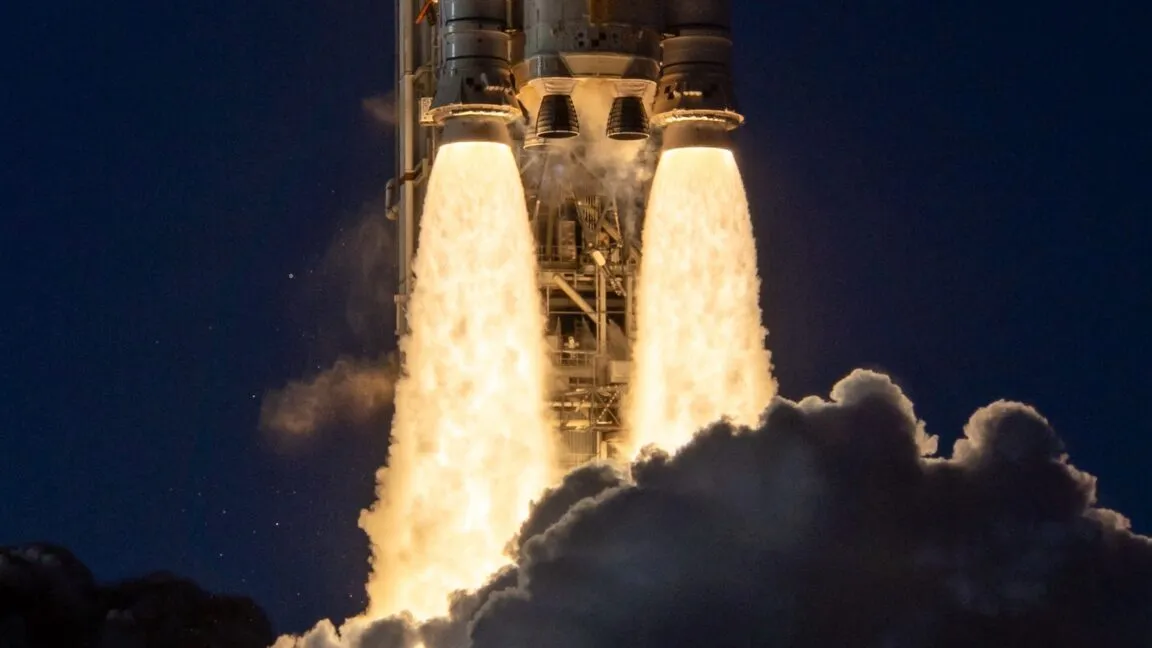
A severe launch shortage is projected to affect the global space industry through the end of this decade, according to a new report from analytics firm Quilty Space. The industry faces a deficit of approximately 150 launches compared to demand from civil space agencies and satellite operators between now and 2030. If United States military requirements are included, the shortfall could potentially double. This supply crisis is driven by a combination of developmental delays in new rocket generations and the rapid expansion of satellite mega-constellations.
Blue Origin faces delays and infrastructure rebuilding
Blue Origin has announced a delay for the return-to-flight mission of its New Glenn rocket, moving the target from December to January. This delay occurs as the company continues to reconstruct its launch pad at Cape Canaveral, Florida, following a catastrophic explosion approximately six months ago. The company is currently managing significant pent-up demand from major clients, including NASA, Amazon, and the US Space Force.
Despite the scheduling shift, Blue Origin has introduced new hardware intended to bolster the New Glenn's capabilities. This includes the reveal of a new kick stage and a new rocket engine design. The reconstruction of the Florida launch facilities is progressing, which is essential for meeting the requirements of its primary commercial and government partners.
Rising competition in the small and medium-lift sectors
While heavy-lift vehicles face delays, smaller and regional players are making strides in launch capability. In Japan, Interstellar Technologies has secured government backing for its Zero rocket program through the Japan Aerospace Exploration Agency (JAXA). The company was selected for the Acceleration of Commercial Rocket Launch Demonstration program under the Space Strategic Fund.
This government support provides grants of up to $76 million per company to foster a commercial launch industry in Japan. Interstellar Technologies is utilizing these funds to complete the development of the Zero, a two-stage launcher capable of carrying up to 1 metric ton to low-Earth orbit. The company has already achieved the first successful firing test of an orbital-class methane engine in Japan, with the first Zero launch targeted for 2027.
Comparative Launch Vehicle Capabilities
| Rocket Program | Developer | Target Payload (LEO) | Status/Note |
|---|---|---|---|
| Zero | Interstellar Technologies | 1 metric ton | First launch targeted for 2027 |
| Kinetica 2 | CAS Space | ~12 metric tons | First operational flight completed |
| New Glenn | Blue Origin | Heavy-lift | Delayed to January |
China's rapid expansion of satellite constellations
China continues to aggressively expand its orbital infrastructure, specifically through the SpaceSail Internet network, also known as Qianfan. A recent mission successfully launched 18 additional satellites using the Kinetica 2 rocket, developed by the startup CAS Space. This mission represented the first operational flight for the Kinetica 2 vehicle.
The Kinetica 2 utilizes a configuration similar to the SpaceX Falcon Heavy, featuring three side-by-side boosters. However, it is a smaller-scale version, employing three kerosene-fueled engines per booster rather than nine. The vehicle provides a lift capacity of approximately 12 metric tons to low-Earth orbit. CAS Space has indicated intentions to eventually recover and reuse these boosters. The SpaceSail constellation currently consists of 275 satellites, with the first phase of the network aiming for a total of 1,296 satellites.
India's navigation system recovery
India has successfully launched the NVS-03 satellite to bolster its regional navigation network. The mission utilized a Geosynchronous Satellite Launch Vehicle (GSLV) to place the spacecraft into orbit. This launch is a critical step in restoring the reliability of India's second-generation navigation system, which had previously been hampered by atomic clock failures in older satellites.
To prevent future reliability issues, the NVS-03 carries multiple clocks of varying designs. This redundancy is intended to mitigate the risk of total system failure seen in previous iterations. While the GSLV has historically had a mixed performance record—with six failures out of 20 launches—the recent mission was characterized by V. Narayanan, head of India's space agency, as the "most precise launch of any rocket in the world."
Emerging propulsion technologies and space infrastructure
New ventures are focusing on reducing the reliance on Earth-based propellants through innovative propulsion methods. Argo Space, founded in late 2022 by three former SpaceX employees, is developing satellites that utilize water as a primary resource. This approach aims to provide not only propulsion but also cooling and radiation shielding.
The Argo Space propulsion system functions by using solar power to split liquid water into hydrogen and oxygen gases, which are then burned to generate thrust. This method allows satellites to carry a reservoir of liquid water rather than separate tanks of liquid hydrogen and liquid oxygen. Although the company's first mission in July failed due to a solar array deployment issue, two additional missions are scheduled for 2027 to demonstrate these water-based thrusters.