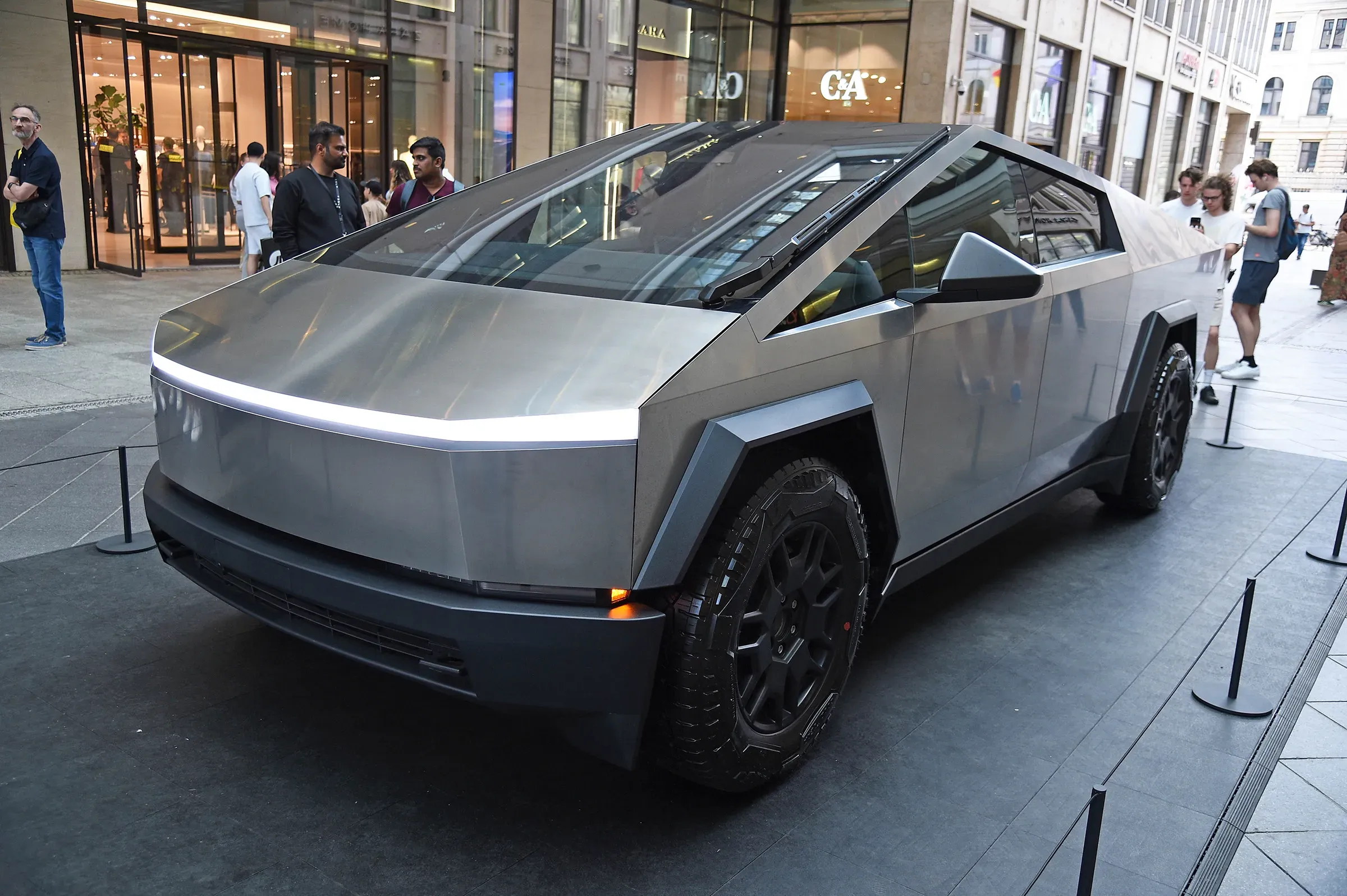
The Cybertruck production end is set for next year at Tesla's Texas Gigafactory, marking a significant pivot in the electric vehicle industry. This move signals a transition away from massive, heavy electric trucks toward smaller, more efficient vehicles that utilize significantly less battery capacity. As automakers like Ford and Rivian prioritize compact models, the industry is addressing battery supply chain constraints and consumer affordability. This shift follows a period of declining sales driven by the removal of EV incentives and changing political landscapes.
Tesla shifts focus as heavy EV era wanes
Tesla will cease production of the Cybertruck at its Texas Gigafactory next year, a decision that reflects broader shifts in the electric vehicle market. The Cybertruck has faced challenges including divisive design, various recalls, and subpar sales performance. While the vehicle remains a high-profile product, its discontinuation aligns with a growing trend where the era of massive electric trucks appears to be receding in favor of more practical, smaller-scale alternatives.
Elon Musk has indicated that the end of Cybertruck production is intended to make room for the manufacturing of Cybercabs. This transition represents a massive reduction in battery scale; while the Cybertruck relies on a 123-kilowatt-hour battery, the planned Cybercabs are expected to utilize just 48 kilowatt-hours. This move highlights a strategic pivot from heavy-duty utility to high-volume, lightweight mobility.
The impact of vehicle scale on manufacturing
The move toward smaller platforms allows manufacturers to optimize factory floor space and assembly lines for higher throughput. By moving away from the complex requirements of heavy-duty trucks, Tesla can focus on the high-volume requirements of urban mobility solutions. This shift is not merely about product variety but about fundamental changes in how battery energy is allocated to meet different consumer needs.
Comparing battery scale across major EV models
The scale of batteries used in heavy electric trucks has historically placed immense pressure on the supply chain. The Cybertruck's 123-kilowatt-hour battery weighs approximately 1,600 pounds, accounting for roughly a quarter of the total vehicle weight. This heavy-duty approach was shared by Ford's F-150 Lightning, which was also canceled late last year. Comparing these massive units to emerging smaller models reveals the direction of the industry.
| Vehicle Model | Battery Capacity (kWh) | Estimated Weight/Notes |
|---|---|---|
| Tesla Cybertruck | 123 kWh | ~1,600 lbs battery |
| Ford F-150 Lightning | 98–131 kWh | Heavy-duty truck |
| Rivian R2 | 88 kWh | Compact SUV |
| Tesla Cybercab | 48 kWh | Planned urban vehicle |
The data suggests that while the flagship models of the early EV era focused on maximizing range through sheer battery volume, the next generation is prioritizing efficiency. For instance, the Rivian R2, which launched this year, utilizes an 88-kilowatt-hour battery—significantly smaller than the R1S flagship or the Cybertruck. This trend toward moderate battery sizes is becoming the standard for the top-selling segments of the market.
The drive toward EV affordability and efficiency
Building smaller vehicles is a primary mechanism for reducing the average transaction price of electric vehicles. Because the battery pack remains the most expensive component of any EV, reducing its size directly lowers the entry price for consumers. Currently, the average transaction price for a new EV model stands at $55,800, according to Cox Automotive, a figure that remains high for many households.
Smaller vehicles require less energy to propel, allowing manufacturers to achieve acceptable ranges without the massive weight penalties associated with large trucks. This efficiency allows for several strategic advantages:
- Lower MSRPs: Smaller batteries enable sub-$30,000 price points, such as Ford's planned Fathom pickup.
- Reduced Weight: Less mass improves handling and reduces wear on tires and suspension components.
- Optimized Energy Use: Vehicles like the Hyundai Ioniq 5 can perform daily tasks—commuting and grocery shopping—using roughly half the battery capacity of a Cybertruck.
The startup Slate is also targeting this segment with a tiny electric pickup that can be converted into an SUV, featuring a base model priced below $25,000. While preorders for such models can be volatile, the market demand for lower-cost entry points is increasingly evident.
Navigating the battery supply chain and political landscape
The shift toward smaller EVs is also a response to the limitations of the global battery supply chain. By utilizing smaller, more efficient battery packs, automakers can serve a larger number of customers with the same amount of raw materials. This is critical as the industry attempts to meet growing demand amidst supply volatility.
Political shifts have also played a significant role in shaping consumer behavior and manufacturer strategy. Following the removal of EV incentives by the Trump administration last year, sales in the United States saw a notable decline. While rising gas prices and international conflicts, such as the Iran War, have spurred renewed interest in electric and hybrid options, the market remains sensitive to policy changes.
The impact of policy on EV adoption
The current political environment presents challenges for the widespread adoption of electric vehicles. Even with a Democratic-controlled Congress, the return of federal EV incentives under a Trump administration is viewed by analysts as unlikely. However, should the political landscape shift in 2028, automakers positioned with smaller, more affordable fleets may be better prepared to capture the resulting surge in demand. This preparedness is essential for mitigating the risks of delivery delays and supply chain bottlenecks that often plague high-capacity battery production.
Market trends: Crossovers and mid-sized dominance
Despite the high-profile nature of large electric trucks, the actual sales data indicates that the most successful EVs are not the largest ones. While models like the Kia EV9 and the Rivian R1S remain in the top 10 US EV sales, the majority of the top-selling segment consists of crossovers, sedans, and mid-sized SUVs. These vehicles typically feature moderately sized batteries that balance range with cost.
The market is also seeing a resurgence in interest for extended-range models and hybrids. As consumers feel the impact of high fuel prices, the flexibility of hybrid technology has led to an uptick in sales. For automakers, the path forward appears to be a dual strategy: maintaining a presence in the premium large-SUV market while aggressively expanding into the compact and sub-$30,000 segments to capture the mass market.