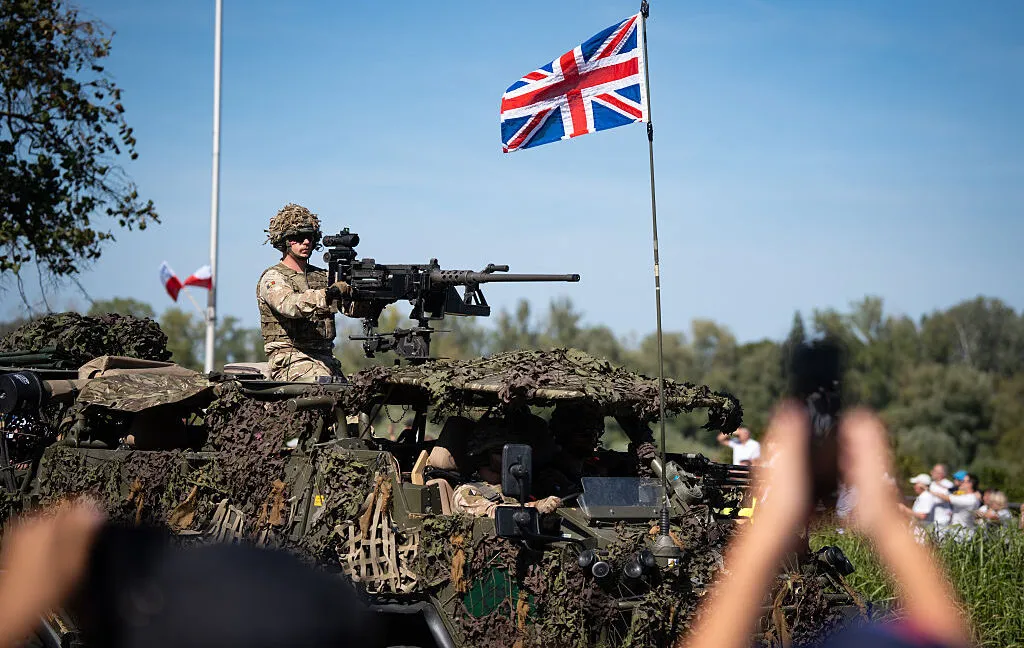
A British soldier facing blackmail after ignoring operational security orders has been sentenced to 10 months in detention. Daniel Barton-Kennedy, a corporal in the 1st Battalion of the Duke of Lancaster Regiment, was sextorted after failing to remove his SIM card before deployment to Estonia in early 2026. The incident, which involved the theft of nude photographs, resulted in a court-martial and a reduction in rank. This breach occurred during Exercise Eastern Warrior, a military deployment near the Russian border, highlighting the risks of personal device usage in sensitive zones.
The mechanics of the security breach and subsequent sextortion
The blackmail attempt began after Daniel Barton-Kennedy failed to adhere to specific electronic device protocols established by the British Army prior to deployment. While stationed in Tapa, Estonia—an area located approximately 90 miles west of the Russian border—Barton-Kennedy was targeted by an unknown party who had gained unauthorized access to his mobile device.
According to a 21-page British appeals court document shared with Ars Technica by the Estonian newspaper Eesti Ekspress, the compromise allowed attackers to access the photo section of his phone. The attackers successfully stole nude photographs and used his social media presence to identify him. This information was then leveraged to initiate a sextortion attempt.
The timeline of the extortion attempt is detailed as follows:
- Initial contact: The attacker identified Barton-Kennedy and demanded payment.
- First payment: Barton-Kennedy initially agreed to pay £100 ($133) to the attacker.
- Escalation: The attacker increased the demand to £250 ($333).
- Reporting: Upon the demand for a higher sum, Barton-Kennedy informed his platoon commander on January 19, 2026.
The escalation of financial demands
The transition from a relatively low-sum demand to a higher figure served as the catalyst for the soldier's decision to report the incident. While the initial £100 payment may have been an attempt to resolve the situation privately, the escalation to £250 signaled a persistent threat that could not be easily silenced through a single transaction. This escalation ultimately brought the breach into the purview of military command.
Operational security protocols and the failure to comply
The breach was not a result of a spontaneous error but a direct violation of repeated instructions regarding operational security (opsec). The British Army had implemented specific requirements for all personal electronic devices to mitigate the risk of tracking and data theft in deployment zones.
The specific instructions provided to the 1st Battalion of the Duke of Lancaster Regiment included the following mandates:
- SIM Card Removal: Personnel were ordered to physically remove SIM cards from their mobile devices.
- Location Settings: All location-tracking settings were required to be switched off.
- Network Security: The use of a trusted virtual private network (VPN) was mandatory for all personal electronic device usage.
These briefings were not limited to a single event. According to the court documents, Barton-Kennedy was briefed on these orders on January 7, 2026, while still in the United Kingdom. Upon the unit's arrival in Estonia days later, the personnel received further briefings and reminders of the existing policy. Barton-Kennedy’s failure to implement these measures left his device vulnerable to the remote exploitation that led to the theft of his private data.
Court-martial proceedings and legal outcomes
Following the report of the blackmail, Daniel Barton-Kennedy faced legal action through a military court-martial. The proceedings focused on his disobedience of a lawful command, which is a critical violation within military discipline. On July 30, 2026, Barton-Kennedy appeared at a hearing where he pleaded guilty to the charges.
The court imposed several disciplinary measures as a result of the conviction:
| Penalty Type | Details of Sentence |
|---|---|
| Criminal Sentence | 10 months in detention |
| Rank Status | Reduction in rank |
| Legal Status | Guilty plea recorded |
Barton-Kennedy attempted to appeal the sentence, but the appeal was denied in August 2026. During the legal process, the corporal sought leniency by asking the court to consider his personal circumstances. He testified that the restriction on his mobile device prevented him from contacting his pregnant partner and his daughter on her birthday. Despite these pleas, the court maintained the severity of the punishment for the breach of command.
Defense arguments regarding personal circumstances
In his defense, Barton-Kennedy emphasized the emotional toll of being disconnected from his family during the deployment. He argued that the inability to communicate with his pregnant partner and daughter was a significant hardship. However, the legal focus remained on the breach of duty. In a written statement, he expressed that he was "stunned" by the initial blackmail message and noted that, despite his shock, he recognized his duty to report the compromise without delay.
Military response to security breaches
The British Army has maintained a strict stance on the consequences of violating security protocols, particularly those involving personal devices in sensitive geographic locations. The incident in Estonia serves as a high-profile example of the potential consequences of non-compliance with opsec mandates.
In a statement provided to Ars Technica, Lt. Col. EP Mackie, a spokesperson for the British Army, addressed the necessity of these measures. Mackie stated that the security protocols are designed specifically to protect the safety of military personnel. The Army's position is that any breach that compromises either personal safeguarding or operational security will be met with swift and uncompromising disciplinary action.
The incident underscores the tension between individual personal needs—such as maintaining contact with family—and the collective security requirements of a military unit operating near contested borders. For the British Army, the risk of a single device being used to identify or track personnel outweighs the personal convenience of maintaining cellular connectivity.