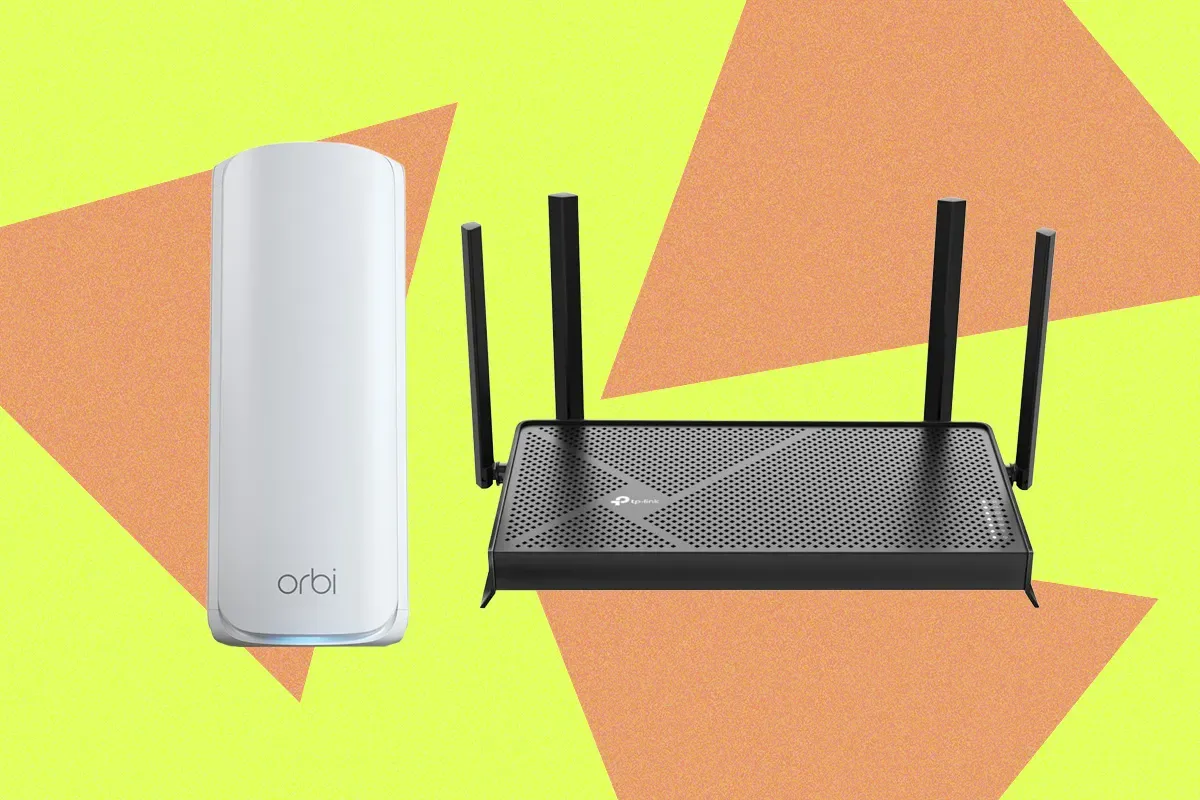
The best Wi-Fi routers for 2026 provide reliable, high-speed connectivity across various home sizes and budgets, with the Asus RT-BE58U emerging as the top choice for most users. This Wi-Fi 7 model offers affordable performance for homes up to 2,000 square feet. Testing included over 50 devices to identify optimal solutions for gaming, streaming, and multi-device households. While high-end tri-band models like the Asus RT-BE96U offer maximum throughput, budget-friendly options such as the TP-Link Archer BE230 provide essential Wi-Fi 7 features at a lower entry point.
Selecting the right router for your household needs
Choosing the best Wi-Fi router depends heavily on your specific internet connection speed, the physical layout of your home, and the number of high-bandwidth devices in use. For many families, a single high-quality router is sufficient to cover a standard two-story home, whereas larger properties or those with significant structural interference may require a mesh Wi-Fi system to eliminate dead zones.
When evaluating hardware, the transition to Wi-Fi 7 introduces significant technical shifts. While older standards like Wi-Fi 6 or 6E are still functional, Wi-Fi 7 brings advanced features such as Multi-Link Operation (MLO), 4K-QAM, and 160 MHz channels. However, users must ensure their client devices support these new standards to realize the full speed and bandwidth benefits. Additionally, the regulatory landscape in the US is shifting; following an FCC announcement in March, some foreign-made routers may face sales restrictions unless they secure a Conditional Approval. Currently, manufacturers like Netgear, Eero, and Asus have secured such approvals, ensuring their products remain available for sale and firmware updates until at least January 1, 2029.
Top recommendation: The best Wi-Fi router for most people
The Asus RT-BE58U is the recommended choice for the majority of users due to its balance of affordability and Wi-Fi 7 capabilities. During testing in a 1,600-square-foot, two-floor home, this dual-band router maintained fast and reliable connectivity that rivaled significantly more expensive systems.
Because it is a dual-band router, it lacks the 6-GHz band found in tri-band models. The 6-GHz band offers the highest bandwidth and fastest speeds but possesses a very short range. Despite this, the RT-BE58U provides essential Wi-Fi 7 benefits including MLO and enhanced security. It features a 2.5-Gbps WAN/LAN port, a 1-Gbps WAN/LAN port, three additional gigabit LAN ports, and a USB WAN port capable of 4G LTE and 5G mobile tethering.
One notable advantage of the Asus ecosystem is the inclusion of Trend Micro’s AiProtection Pro and robust parental controls at no extra cost. Unlike many competitors that utilize subscription models for security features, Asus provides these services for the lifetime of the router. Users should note, however, that using AiProtection involves sharing data with Trend Micro, necessitating a review of their privacy policy.
Technical specifications of the Asus RT-BE58U
- Wi-Fi Version: Wi-Fi 7
- Bands: 5 GHz and 2.4 GHz
- Key Ports: 1x 2.5 Gbps WAN, 1x Gigabit WAN/LAN, 3x Gigabit LAN, 1x USB WAN
- Ideal Environment: Homes up to 2,000 square feet with up to 1-Gbps connections
High-performance choice: The best router upgrade pick
For users with unlimited budgets and a need for maximum throughput, the Asus RT-BE96U serves as a premium tri-band Wi-Fi 7 solution. This massive router is designed for expansive coverage, capable of blanketing both indoor living spaces and outdoor gardens with stable, high-speed signals.
The RT-BE96U utilizes three bands: 2.4-GHz, 5-GHz, and 6-GHz. At close range, the 6-GHz band supports the widest 320 MHz channels, making it exceptionally fast for downloading large files, gaming, or high-resolution streaming. In comparative testing, only the Asus GT-BE98 Pro gaming router performed better in terms of raw speed. The hardware is heavily equipped with eight large antennas and includes two 10-Gbps ports (one WAN/LAN and one LAN), four gigabit LANs, and both USB 3.2 and USB 2.0 ports.
While the performance is top-tier, the device has practical considerations. Its large physical footprint makes it difficult to mount, requiring dedicated space. Furthermore, to fully utilize the router's potential, users must possess devices that support Wi-Fi 7 and have access to a multi-gigabit internet connection. Similar to the RT-BE58U, the RT-BE96U avoids subscription-based security, offering AiProtection and VPN functionality as part of the initial purchase.
Budget-friendly options and mid-range alternatives
For those seeking the lowest entry point into Wi-Fi 7, the TP-Link Archer BE230 is a viable budget contender. While it does not match the performance of higher-end Asus models, it provides a way to access modern standards without a heavy investment.
The Archer BE230 is a dual-band router (2.4-GHz and 5-GHz) and lacks the 6-GHz band. It operates on a 2 x 2 MIMO configuration, resulting in maximum bandwidths of 688 Mbps and 2,882 Mbps respectively. The hardware includes a 2.5-Gbps WAN, a 2.5-Gbps LAN, and three gigabit LAN ports. While initial testing showed some limitations in 5-GHz range and band steering, the device proved capable of supporting a busy household of four people without major interruptions.
| Router Model | Best For | Bands | Key Feature |
|---|---|---|---|
| Asus RT-BE58U | Most People | Dual-band | Affordable Wi-Fi 7 & Free Security |
| Asus RT-BE96U | Power Users | Tri-band | 10-Gbps ports & Massive Coverage |
| TP-Link Archer BE230 | Budget | Dual-band | Low-cost Wi-Fi 7 entry |
| Netgear Nighthawk RS300 | Midrange | Not Specified | Balanced performance |
Summary of testing and router selection criteria
The selection of these routers is based on real-world testing in a high-demand environment characterized by multiple simultaneous streams and gaming sessions. Performance is measured by the ability to maintain stability under load and the effectiveness of the router's coverage across different frequency bands.
When comparing models, several technical factors determine the final ranking:
- Band Availability: Tri-band routers (including 6-GHz) are superior for speed, while dual-band models are more cost-effective.
- Port Speeds: The presence of 2.5-Gbps or 10-Gbps ports is critical for users with high-speed fiber connections.
- Security Models: Subscription-free security (like Asus's AiProtection) provides better long-term value than models requiring monthly fees.
- Management Interface: Ease of use via mobile apps versus the depth of control offered through web interfaces.