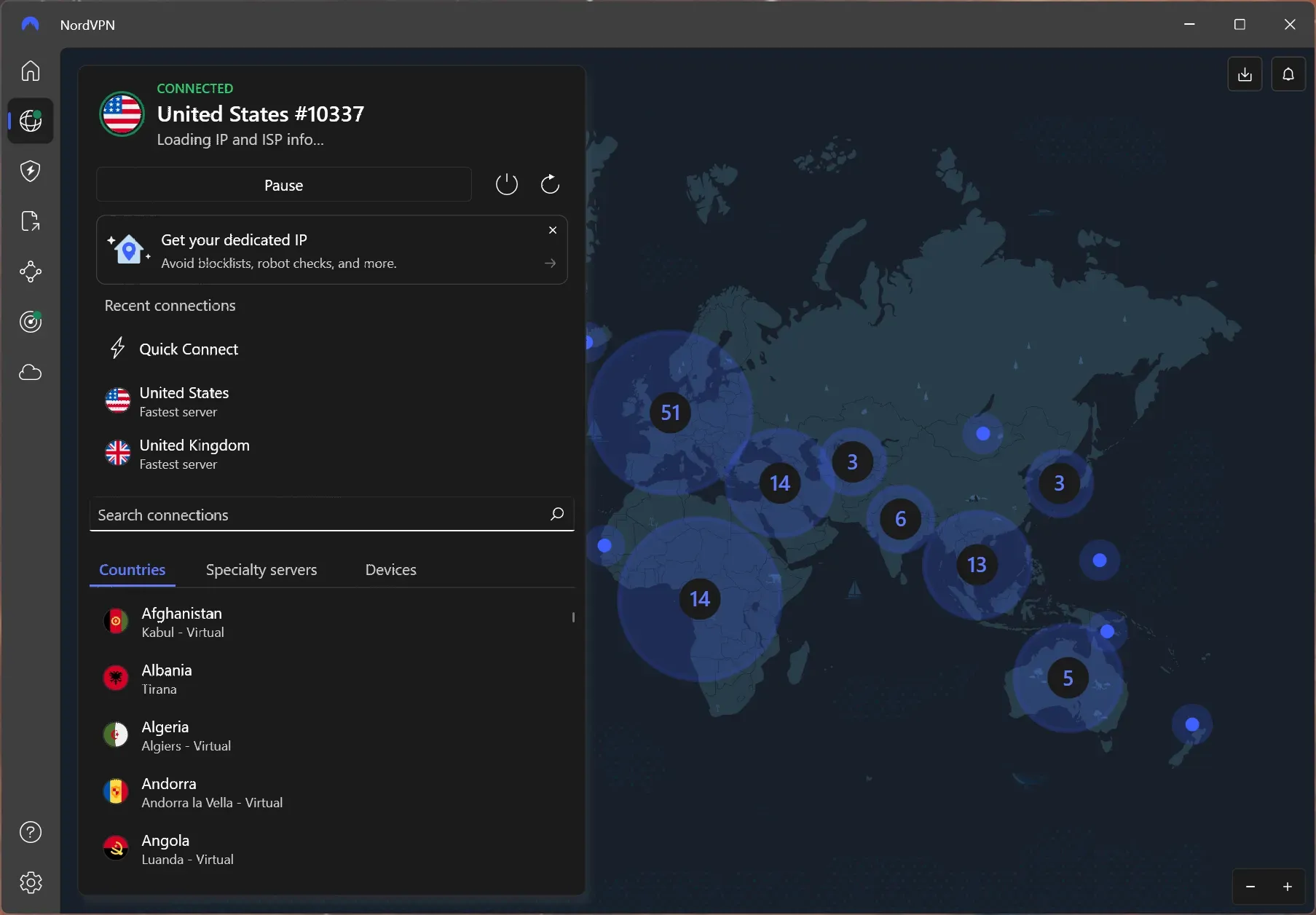
The best VPN services for 2026 provide encrypted tunnels to anonymize internet traffic and bypass regional content restrictions. According to testing by Jacob Roach, top-tier providers like Proton VPN Plus, NordVPN Plus, Windscribe VPN, and Mullvad VPN lead the market in reliability and privacy. While many providers claim total anonymity, selection should be based on proven no-logs policies and performance. Users can currently access Proton VPN Plus at a discounted rate of $2.49 per month for 24 months during early Black Friday sales.
Top-rated VPN providers for privacy and performance
Proton VPN Plus is identified as the best overall VPN service due to its extensive server network and integrated security features. The service provides access to more than 20,000 servers and can protect up to 10 devices simultaneously. Beyond basic encryption, Proton includes NetShield to block advertisements, trackers, and malware.
Other specialized picks cater to specific user needs, ranging from budget-friendly options to high-privacy configurations. The following table summarizes the primary recommendations from the 2026 testing:
Choosing between these services requires balancing cost against specific functional requirements, such as the need for a static IP or the ability to bypass specific geo-restrictions on streaming platforms like Netflix.
Understanding VPN mechanics and security benefits
A Virtual Private Network (VPN) functions by creating an encrypted tunnel for all internet traffic, routing it through a remote server rather than directly through an Internet Service Provider (ISP). This architecture ensures that browsing data is not stored by the ISP, which can enhance online anonymity.
The role of VPN protocols in encryption
The core of a VPN's effectiveness lies in its protocol. While modern internet traffic is largely encrypted via HTTPS, that encryption typically only begins once a connection to a specific website is established. A VPN protocol adds a critical layer of security by encrypting data before it even reaches the VPN server. This is particularly vital when using untrusted or public networks, such as those found in airports or coffee shops, where an intruder could otherwise intercept unencrypted local traffic.
Beyond security, VPNs are frequently utilized to circumvent geo-restrictions. By routing traffic through a server in a different geographic location, users can access different content libraries on services like Netflix or check product availability in various global regions. However, users should note that while VPNs provide privacy, they do not eliminate the tracking effects of browser fingerprinting and cookies.
Essential VPN features and technical terminology
Navigating the VPN market requires an understanding of specific technical features that dictate how much privacy and control a user actually possesses. Features like split tunneling and kill switches are standard in high-quality services but are not universal.
- Kill Switch: A vital security mechanism that automatically disables the internet connection if the VPN connection drops, preventing data leaks.
- Split Tunneling: Allows users to select specific applications to use the VPN tunnel while allowing others to use the standard internet connection.
- Double-hop: Routes traffic through two or more VPN servers in succession, increasing privacy at the expense of connection speed.
- Static IP: Provides a consistent IP address, which is necessary for users requiring external access to a home or office network.
- Port Forwarding: Enables bypassing the VPN tunnel for specific ports, useful for running media servers.
Advanced privacy and monitoring tools
Premium services often include advanced tools designed to combat sophisticated tracking and data breaches. For instance, NordVPN and Proton VPN offer dark web monitoring, which alerts users if their email addresses or personal information appear in known data breaches. Mullvad VPN features a unique tool called DAITA, which introduces background noise to a connection to combat AI-assisted network analysis. Additionally, many providers now include DNS blocking or domain block lists to prevent ads and trackers from being served through the VPN tunnel.
Cost structures and market considerations
VPN pricing typically follows a tiered model where monthly subscriptions are significantly more expensive than long-term commitments. Most prominent services hover around a $10 monthly price point for month-to-month plans, but multi-year discounts are common.
Current market trends show a move toward comprehensive security suites rather than standalone VPNs. For example, Proton offers a "Proton Unlimited" tier for $6.50 a month (billed annually), which integrates VPN services with mail, calendar, password management, and 500 GB of cloud storage. Similarly, Nord Security offers integrated suites that expand functionality beyond simple IP masking.
Navigating free services and subscription risks
While free VPNs are available, they often come with significant caveats. Most free services are highly restrictive, and the industry has seen instances where providers have been caught mishandling user data. The testing identifies Windscribe and Proton as providers with useful, albeit limited, free plans. Users are advised to approach most other free offerings with skepticism regarding their actual privacy claims.
Furthermore, consumers should be aware of subscription practices. Some VPN providers have recently faced class-action lawsuits regarding auto-renewal practices. While these lawsuits do not necessarily prove illegal activity, they highlight the importance of reading terms of service carefully before committing to long-term billing cycles.
Legal status and global accessibility
In the majority of the world, including the US, UK, Canada, the EU, and Australia, VPNs are legal. However, the legality of a VPN often depends on both the specific service used and the nature of the activity performed while connected.
In certain jurisdictions, the legal landscape is more complex:
- Restrictive Environments: Countries like North Korea and Turkmenistan have bans on VPNs, though enforcement is difficult to verify.
- Compliance Requirements: In regions such as India and Russia, governments require providers to comply with local regulations, which has led services like NordVPN to shut down certain servers in those areas.
- Activity Legality: Regardless of the country's stance on VPN technology, using a VPN to engage in illegal activities remains a crime.
| Category | Recommended Service | Key Feature |
|---|---|---|
| Best Overall | Proton VPN Plus | 20,000+ servers and NetShield blocking |
| Best Upgrade | NordVPN Plus | Comprehensive security suite |
| Best Free VPN | Windscribe VPN | Restrictive but useful free tier |
| Best No-Logs VPN | Mullvad VPN | DAITA for AI-assisted analysis protection |