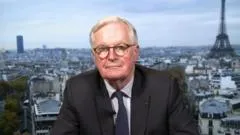
The EU single market cannot be accessed by the UK through a 'cherry picking' approach, according to former negotiator Michel Barnier. While Prime Minister Andy Burnham has suggested exploring closer economic ties and potentially rejoining the internal market, Barnier told the BBC that any such move would require full compliance with the bloc's core requirements. He emphasized that the UK must adopt the 'four freedoms'—the circulation of goods, services, capital, and people—to participate. This warning comes as both sides prepare for a high-level meeting in Brussels to discuss food standards, youth visas, and carbon trading links.
The requirement for the 'four freedoms'
Michel Barnier has stated that there is no "single market à la carte" menu available for the United Kingdom. Any attempt to rejoin the single market to facilitate the free trade of goods without border controls would necessitate the UK's adherence to the same fundamental conditions as current member states. These conditions are defined by the EU as the "four freedoms": the free movement of goods, services, capital, and people.
"There will be no possibility to have one freedom and not the other," Barnier told the BBC's Sunday with Laura Kuenssberg. "The four freedoms are clearly the four conditions to be inside a single market." This stance directly addresses the UK's potential desire to access the economic benefits of the internal market while potentially avoiding the political implications of certain EU mandates.
Defining the four freedoms
The four freedoms serve as the structural pillars of the European Union's internal market. For a country to benefit from the seamless movement of goods and services, it must also accept the movement of capital and the free movement of people. Barnier's insistence on this indivisibility suggests that any partial alignment sought by the UK government would likely be rejected by EU member states seeking to maintain the integrity of their economic bloc.
Political shifts under Prime Minister Andy Burnham
Prime Minister Andy Burnham is currently considering a reshaping of the UK's relationship with Europe, nearly six years after the country's exit from the EU. Since taking office in July, Burnham has indicated that he could lead the Labour party toward pursuing a much closer relationship, including the possibility of rejoining the EU as a full member. However, he has explicitly ruled out implementing major structural changes before the next general election.
Burnham has proposed laying out "different options" for the UK-EU relationship during an upcoming summit in Brussels. His strategy appears to involve presenting various models of engagement to the European Union before attempting to build a domestic consensus with the British public. This approach follows a period where his predecessor, Sir Keir Starmer, had ruled out re-establishing free movement in the 2024 election manifesto.
The controversy of free movement and political divisions
The free movement of people remains one of the most contentious elements of the EU single market and a primary driver of the 2016 Brexit referendum. Because this freedom allows EU citizens to live and work in other member states without requiring a visa, it represents a significant political hurdle for any UK government seeking closer ties. Burnham has attempted to navigate this sensitivity by stating he would not re-establish free movement without a national referendum.
This position creates a significant political fault line. While Burnham seeks to explore economic integration, the prospect of returning to free movement remains a major point of contention with the Conservative Party and Reform UK. Downing Street has sought to manage expectations by clarifying that the Prime Minister is not currently advocating for the immediate return of free movement, despite his broader interest in economic rapprochement.
| Policy Element | Status/Position | Political Context |
|---|---|---|
| Single Market Access | Proposed for exploration | Part of Burnham's potential reshaping of ties |
| Free Movement of People | Requires referendum | Key dividing line with Conservatives/Reform UK |
| Full EU Membership | Under consideration | Burnham suggested this as a long-term option |
| Immediate Changes | Ruled out | No major shifts before the next election |
Financial implications and the British rebate
Beyond the structural requirements of the single market, Barnier predicted that EU member states would reject any attempt to reinstate the British financial rebate. This specific mechanism, which was first negotiated in 1985, allowed the UK to reduce its annual contributions to the EU budget. Barnier argued that the UK's departure from the bloc created a "new situation," which effectively means that any previous financial arrangements are "off the table."
The history of the UK's financial relationship with the EU is characterized by long-standing debate over gross versus net contributions. During the Brexit campaign, the Vote Leave movement utilized the claim that the UK sent £350 million per week to the EU. While Boris Johnson defended this figure as a gross contribution that was potentially underestimated, critics noted it failed to account for the UK's £75 million-a-week rebate and various EU investments within the country.
The debate over the £350 million claim
The legacy of the £350 million per week figure continues to influence the discourse on UK-EU financial relations. Boris Johnson argued in 2017 that once accounts were settled, the UK would "take back control" of these funds for domestic use, such as the NHS. In his 2024 memoirs, Johnson maintained that even if the net figure was closer to £175 million, the lack of democratic control over EU spending remained a primary concern for the British electorate.
Diplomatic efforts and upcoming Brussels summit
Despite the friction regarding the single market and financial contributions, both the UK and the EU are seeking pragmatic areas of cooperation. A high-level meeting in Brussels, scheduled to take place in 10 days, is expected to serve as a platform for unveiling specific sectoral deals. These negotiations aim to address practical economic and social issues that affect both parties.
The anticipated agreements include:
- Food Standards: Aligning regulations to facilitate smoother trade in agricultural products.
- Youth Visas: Creating pathways for easier movement for younger citizens.
- Carbon Trading: Re-linking British industry to the EU's carbon trading regime to ensure environmental regulatory alignment.
While these technical deals may provide immediate relief for certain industries, they do not resolve the fundamental disagreement over the "four freedoms" that Barnier highlighted. The upcoming summit will likely test whether the UK can achieve meaningful economic integration through sectoral cooperation without triggering the broader political requirements of the single market.
Responses from political opposition
The comments made by Michel Barnier have drawn sharp criticism from leaders of the pro-Brexit movement. Nigel Farage, leader of Reform UK, responded to Barnier's critiques by characterizing the former negotiator as "arrogant, out of touch and a bully." Farage suggested that Barnier's stance serves to validate the UK's decision to leave the European Union.
Barnier's criticisms of the Brexit campaign were also pointed. He specifically addressed the promises made by figures such as Nigel Farage and Boris Johnson, labeling the claims regarding the £350 million weekly contribution as "not true" and "a lie." This ongoing tension underscores the difficulty of the current diplomatic environment, where technical negotiations on carbon trading and food standards must coexist with deep-seated ideological disagreements over sovereignty and European integration.