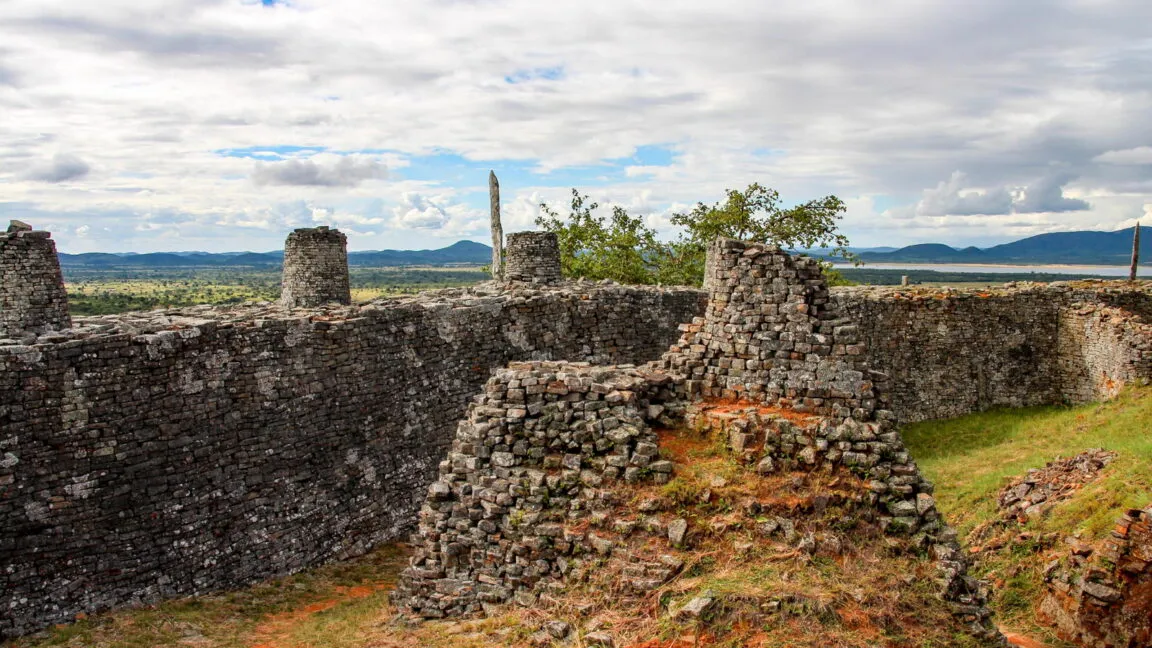
The Bantu expansion was a massive, millennia-long movement of people that fundamentally transformed the demography, technology, and linguistic landscape of sub-Saharan Africa. Starting between 6,000 and 4,000 years ago, Bantu-speaking communities migrated from western Africa across the continent's southern half, introducing sedentary farming, livestock rearing, and advanced ironworking. Today, approximately 350 million people speak one of roughly 500 Bantu languages, and millions more carry Bantu ancestry in their DNA. This complex historical process is being reconstructed through a multidisciplinary approach combining linguistics, archaeology, and modern genomic analysis.
Technological mastery and the legacy of ironworking
The advanced iron-smelting capabilities of Bantu-speaking societies provided a significant technological advantage that facilitated their spread across the continent. In the ancient city of Great Zimbabwe, which thrived as a kingdom between 1000 and 1700 AD, inhabitants demonstrated sophisticated metallurgical skills. Archaeological evidence near the city's stone ruins reveals clusters of iron-smelting furnaces that were capable of reaching temperatures exceeding 2,100° Fahrenheit.
Unlike many contemporary methods that relied on manual bellows to force air into the furnace, these structures utilized natural-draft technology. These furnaces were designed to suck air in through a specific mechanism and expel it through a chimney, eliminating the need for constant human labor. This efficiency allowed for the large-scale production of essential tools such as axes, arrowheads, and hoes.
The sophistication of Great Zimbabwe's metallurgy
Archaeometallurgist Ezekiel Mtetwa of Chicago’s Field Museum of Natural History has studied these sites extensively. According to Mtetwa, the size and quantity of these furnaces, combined with the use of natural-draft systems, serve as clear indicators of an intensive and technologically sophisticated iron production industry. This ability to mass-produce metal tools likely played a critical role in the expansion of Bantu-speaking groups, as it supported more efficient farming and more effective hunting and defense.
Linguistic evidence and the north-to-south progression
Linguistics provided the earliest clues regarding the scale and origin of the Bantu expansion. The remarkable similarity between Bantu languages across vast distances was noted as early as 1497, when a Portuguese crew member reportedly communicated with locals in southeastern Africa using knowledge gained in west-central Africa. The term "Bantu"—the plural of muntu, meaning "human being"—was adopted by 19th-century linguists to describe this massive language family.
Archaeological findings have reinforced these linguistic patterns by showing a clear geographic progression of culture. Researchers have identified a consistent north-to-south movement of specific cultural markers, including unique pottery styles, evidence of village life, and the introduction of western African crops and domesticated animals. According to archaeological scientist Shadreck Chirikure of the University of Oxford, there is a visible north-to-south progression in the dating of these sites across eastern and southern Africa.
| Evidence Type | Primary Indicators | Scientific Insight |
|---|---|---|
| Linguistic | Similarity between ~500 languages | Suggests a common ancestral origin in western Africa. |
| Archaeological | Pottery, iron furnaces, village sites | Shows a north-to-south progression of technology and settlement. |
| Genetic | DNA diversity patterns | Confirms population expansion from a central source. |
Genetics confirms the pattern of population movement
While some scholars in the 1990s questioned whether the expansion was a movement of people or merely a diffusion of ideas among existing hunter-gatherer groups, genetic data has largely resolved the debate. Modern genomic analysis allows scientists to track ancestral connections by measuring the degree of shared DNA between populations. If a population expands from a single point, genetic diversity typically decreases as the distance from that origin increases.
A 2009 study involving the genetic analysis of 2,432 Africans demonstrated that Bantu-speaking populations in western, central, and southern Africa are much more closely related than their geographic separation would suggest. More recent research in 2024, which analyzed the genomes of 1,763 Africans, identified the highest level of genetic diversity among Bantu speakers in western Africa. Carina Schlebusch, a geneticist at Uppsala University in Sweden, explained that this declining diversity as distance increases is a "typical signature of a population expanding from one place to another."
Tracing the origins in the Grassfields and Congo Basin
Despite the strong linguistic and genetic signals pointing toward western Africa—specifically the Grassfields region of Cameroon—the archaeological record remains difficult to interpret. At the Shum Laka rock shelter in the Grassfields, researchers have found pottery fragments dating from 7,000 to 6,000 years ago, which become more abundant between 5,000 and 4,000 years ago. While these decorated bowls and jars represent a possible trace of Bantu ancestors, the evidence is considered inconclusive.
Archaeologists have turned their attention to the Congo rainforest to find the next stage of the migration. Between 2010 and 2023, Alexandre Livingstone Smith of Belgium’s Royal Museum for Central Africa conducted expeditions along the Congo River. His team discovered pottery shards in several villages that match the styles found further west, dating back to approximately 2,300 to 2,000 years ago. According to Smith, these findings represent the potential first Bantu settlers of the forest, suggesting that ceramic traditions were carried by migrating populations from their original homeland.
Challenges in reconstructing African prehistory
The effort to map the Bantu expansion faces significant hurdles. Unlike many other major human migrations, the history of sub-Saharan Africa lacks extensive written records from the periods in question. Furthermore, the research is often hampered by limited funding for large-scale archaeological and genetic studies across the continent. This makes the multidisciplinary collaboration between linguists, archaeologists, and geneticists essential for piecing together the demographic reshuffling that defines modern Africa.