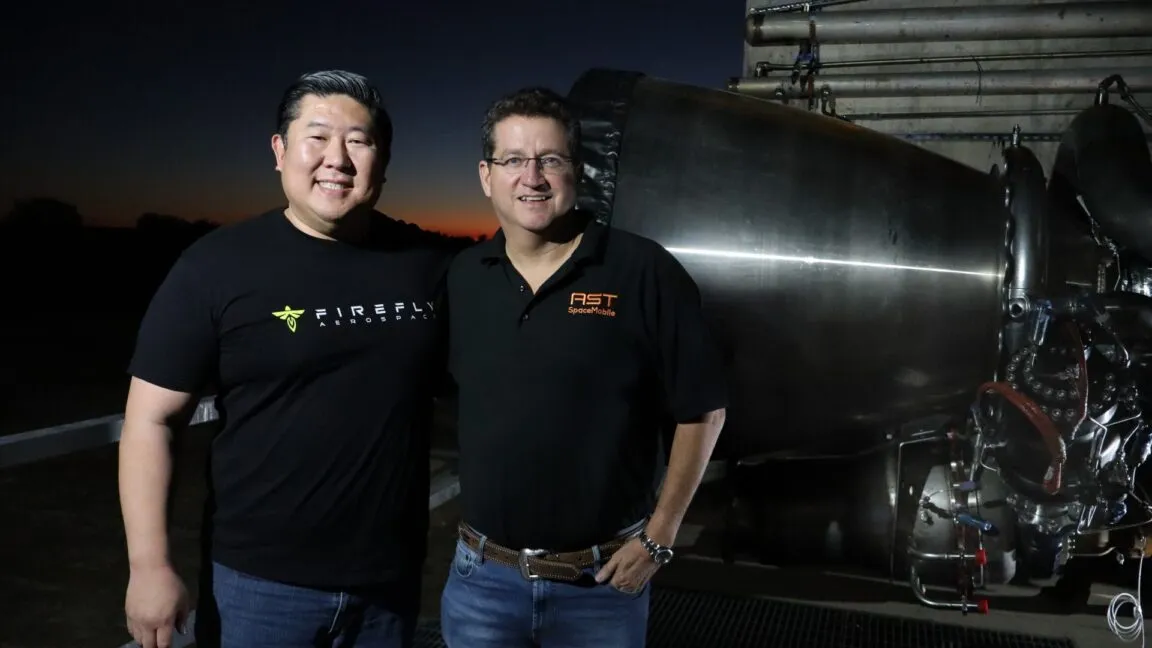
AST SpaceMobile has unveiled the Blacklift, a medium-lift launch vehicle designed to secure unconstrained orbital access. The Texas-based satellite operator aims to begin commercial operations by late 2028, with the rocket capable of delivering 20 metric tons to low-Earth orbit. To realize this vision, the company has committed $1.3 billion to Firefly Aerospace for engine licensing and essential hardware. This strategic move reflects a rising industry trend where constellation operators develop proprietary transportation to bypass global launch capacity constraints and ensure mission reliability.
The strategic pivot to proprietary launch capability
AST SpaceMobile is shifting from a pure satellite operator to a launch provider by developing the Blacklift rocket, a medium-lift vehicle intended to bypass the tightening constraints of the commercial launch market. According to a company news release, the Blacklift rocket is intended to serve as a "springboard to significantly expand our total addressable market." By owning the launch capability, the company aims to secure regular access to orbit and achieve what it describes as the most favorable owner’s economics in the industry.
This decision follows a broader industry trend where large-scale constellation operators, such as Amazon, have had to secure launch capacity years in advance to ensure deployment schedules. As launch availability becomes more volatile, satellite companies are increasingly evaluating the cost-benefit of building their own rockets rather than relying solely on third-party providers like SpaceX or Blue Origin.
Expanding the addressable market through orbital access
The development of Blacklift is not merely a contingency plan but a core component of AST SpaceMobile's long-term scaling strategy. By controlling the launch cadence, the company can theoretically align satellite deployment more closely with its commercial milestones. However, this move places the company in direct competition with established launch providers and requires navigating the immense technical and regulatory hurdles of the aerospace sector.
The $1.3 billion Firefly Aerospace partnership
To accelerate the development of the Blacklift, AST SpaceMobile has entered into a significant commercial agreement with Firefly Aerospace to leverage existing engine technology. The company has committed a total of $1.3 billion to Firefly, a deal structured to provide both hardware and intellectual property. This partnership is designed to mitigate some of the traditional risks associated with rocket development by avoiding the need to design engines from the ground up.
The breakdown of the $1.3 billion commitment is as follows:
- $800 million: For the perpetual license to manufacture Firefly's Miranda and Vira (vacuum-variant) engines.
- $250 million: For the procurement of 27 Miranda engines and nine Vira engines.
- $250 million: For engineering services and support over a three-year period.
The Blacklift's first stage will be powered by nine Miranda engines. While acquiring proven engine technology can reduce development timelines, the integration of these components into a new medium-lift architecture still requires extensive testing and manufacturing infrastructure.
Engine procurement and cost implications
The financial weight of this partnership is substantial. For the first three Blacklift rockets, the cost of the engines alone is estimated at approximately $83 million per vehicle. While the use of Firefly's Miranda engines provides a technical shortcut, the engines themselves may still be years away from flight-proven status on the intended Eclipse rocket, potentially complicating the Blacklift's aggressive development schedule.
Historical context and the reality of development timelines
The stated goal of achieving commercial operations by late 2028 faces significant historical headwinds, as most medium-to-heavy lift rocket programs require five to nine years from announcement to orbital flight. Even SpaceX, which holds the record for the fastest development of a medium-lift vehicle, took 4.7 years to bring the Falcon 9 to orbit. However, SpaceX benefited from existing Merlin engine expertise and a nearly operational Falcon 1 program at the time of the Falcon 9 announcement.
A comparison of recent medium-lift development efforts illustrates the difficulty of this undertaking:
The Vulcan rocket, for instance, required nearly nine years of development and approximately $2 billion in aggregate federal support across its supply chain to reach orbit. This suggests that AST SpaceMobile's two-year window from current development stages to a 2028 launch is highly optimistic compared to industry standards.
Comparing Blacklift to historical benchmarks
When comparing the Blacklift to the early Falcon 9, the scale of the task becomes clearer. The initial Falcon 9 had a lift capacity of approximately 10 tons, roughly half that of the proposed Blacklift. Developing a larger vehicle requires managing greater structural stresses, more complex propulsion requirements, and more significant regulatory scrutiny, all of which typically extend development timelines.
The tension between existing contracts and new rocket ambitions
A central question remains regarding the necessity of the Blacklift rocket given AST SpaceMobile's existing launch commitments. The company has already secured agreements with providers including SpaceX and Blue Origin to deploy over 100 BlueBird direct-to-cell satellites between 2027 and 2028. This creates a perceived contradiction: if the company has sufficient launch capacity to deploy its primary constellation through 2028, the immediate utility of a proprietary rocket is unclear.
The company maintains that Blacklift is a long-term strategic asset rather than a short-term necessity for the BlueBird deployment. However, the massive capital expenditure required for the Firefly deal—$1.3 billion—is a significant investment for a company that is simultaneously attempting to scale its satellite constellation using external launch services.
Analyzing the deployment overlap
The overlap between the BlueBird deployment schedule (2027–2028) and the Blacklift launch target (late 2028) suggests that the rocket is intended for the next phase of the company's growth. If the Blacklift does not meet its optimistic timeline, the company will remain dependent on the commercial market, which is currently experiencing a period of heightened demand and limited availability. The success of the Blacklift could fundamentally change the company's economic profile, but its development carries the risk of significant capital being tied up in a high-stakes aerospace venture.
| Company | Vehicle Name | Estimated Payload Capacity | Status/Notes |
|---|---|---|---|
| United Launch Alliance | Vulcan | Not specified | Reached orbit after 8.7 years |
| Rocket Lab | Neutron | Not specified | In development |
| Relativity Space | Terran R | Not specified | In development |
| Firefly/Northrop Grumman | Eclipse | Not specified | In development |
| Stoke Space | Nova | Not specified | In development |
| AST SpaceMobile | Blacklift | 20 metric tons | Planned for 2028 |