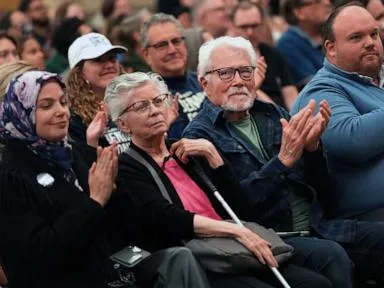
The Abdul El-Sayed Senate win in Michigan marks a historic milestone as he becomes the first Muslim American to serve in the U.S. Senate. Following his victory on Tuesday, November 4, 2026, the grandparents of the Michigan Democratic Senator-elect, Judy and Jan Johnson, expressed their pride in his achievement. They noted that his character has remained consistent from childhood to his political career. The victory follows a competitive race in Michigan, positioning El-Sayed as a central figure in the current Senate composition.
The personal impact of the Michigan Senate victory
The victory of Dr. Abdul El-Sayed in the Michigan Senate race has elicited strong emotional responses from his immediate family, specifically his maternal grandparents, Jan and Judy Johnson. Speaking to ABC News Live on Friday, November 7, 2026, the Johnsons described themselves as "ecstatic" regarding the historic nature of the win. The election of El-Sayed represents a significant shift in the religious and cultural representation within the United States Senate.
For the Johnsons, the political achievement is inseparable from the personal development they have witnessed over several decades. They highlighted that El-Sayed's drive to assist others has been a constant trait. "He's the same now as he was then. Very energetic, very intelligent, very verbal, and really wants to help people," Judy Johnson stated during the interview.
The family's relationship with El-Sayed began when he was four years old, following his father's marriage to their daughter, Jackie. Jan Johnson recalled the early stages of this bond, noting that the connection felt immediate. "I felt like he came into my heart. From the very beginning I just felt good," Johnson said.
Family support and the campaign process
The campaign for the Michigan seat involved active participation from the Johnson family, who provided both emotional and visible support to the Democratic candidate. Their involvement was not limited to private encouragement; they appeared in a campaign advertisement to discuss El-Sayed's upbringing and the values instilled in him. This public endorsement aimed to humanize the candidate through his familial roots.
During his formative years, El-Sayed's connection to his grandparents was reinforced by his residence with them while he attended the University of Michigan. This period of cohabitation allowed the Johnsons to play a practical role in his academic and personal life. Judy Johnson detailed the various ways they assisted him, ranging from providing feedback on his university papers to managing daily domestic tasks such as laundry.
The role of grandparents in candidate development
The support provided by the Johnsons extended beyond the academic years and into the high-pressure environment of the 2026 election cycle. Judy Johnson noted that El-Sayed maintained regular contact with her throughout the campaign, including weekly phone calls. This consistent communication provided a sense of stability amidst the rigors of a Senate race. The family's involvement culminated in their attendance at El-Sayed's campaign election night party, marking the conclusion of the electoral process.
Navigating religious identity and political attacks
The campaign against Dr. Abdul El-Sayed included significant scrutiny and attacks directed at his Muslim faith. As the first Muslim American candidate to secure such a seat, El-Sayed faced a political landscape where religious identity became a central point of contention. This aspect of the race required the candidate and his supporters to navigate highly sensitive cultural and religious tensions.
The Johnsons, who are both Presbyterian deacons, adopted a strategy of positive focus to mitigate the impact of these attacks. When questioned about the negative rhetoric used by opponents regarding El-Sayed's faith, Judy Johnson indicated that the family made a conscious effort to avoid the hostility. "We tried to be positive during the campaign," she told ABC News Live, adding that they "tried not to watch all of those negative things."
El-Sayed himself addressed the nature of these attacks, suggesting they were tactical maneuvers. He stated that the criticisms regarding his faith were intended to distract from the economic and social pain caused by existing policies. This tension between religious identity and policy-driven campaigning defined much of the late-stage race in Michigan.
Family traditions and the post-election period
As the election cycle concludes, the focus for the El-Sayed and Johnson families has shifted toward traditional domestic celebrations. The Johnsons emphasized the importance of upcoming holidays, specifically Thanksgiving, as a time for familial reunification. These traditions serve as a cornerstone for the family's social structure, regardless of El-Sayed's new political responsibilities.
According to the Johnsons, El-Sayed has maintained a consistent role in hosting family gatherings for several years. The upcoming holiday is expected to follow the established pattern of collective contribution and communal dining. "Everybody in our family celebrates Thanksgiving and we all get together and have a good time and everybody contributes to the meal," Judy Johnson explained.
| Subject | Details |
|---|---|
| Candidate | Dr. Abdul El-Sayed (Democratic) |
| Historic Milestone | First Muslim American U.S. Senator |
| Key Supporters | Jan and Judy Johnson (Grandparents) |
| Primary Location | Michigan |
| Family Affiliation | Presbyterian (Johnsons) |